
Editorial Team · on 20 June 2026 · 8 min read · Last reviewed 20 June 2026
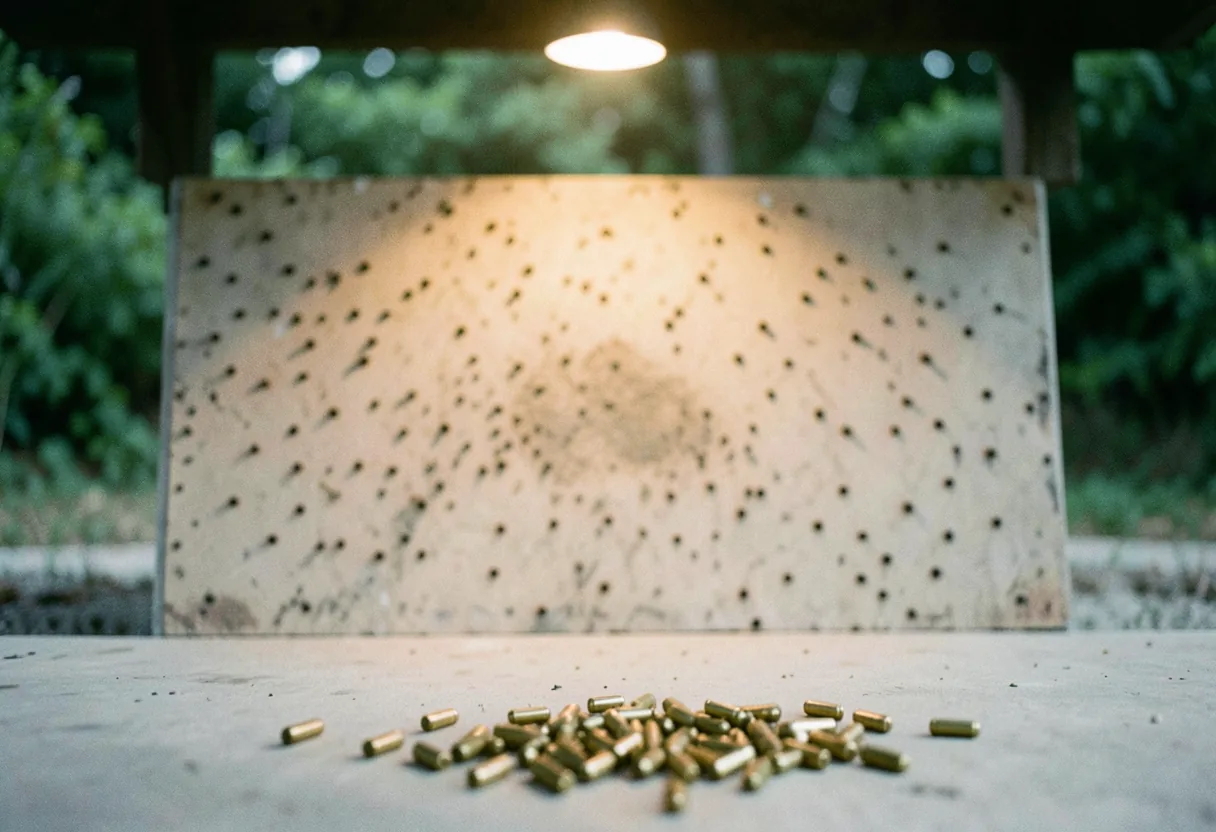
An air rifle range safety backstop is a specifically designed barrier at the end of an air rifle shooting range that safely captures and contains pellets to prevent ricochets or stray shots from causing harm.
Think of it like a catcher’s mitt for bullets, just as a baseball glove stops a fastball, a backstop halts an air rifle pellet, ensuring it doesn’t become a hazard.
Key facts
- Safety backstops are typically made from dense materials like bulletproof glass, thick rubber, or specially designed fabrics.
- They must be capable of stopping pellets traveling at speeds up to 1,000 feet per second or more.
- Backstops are essential for both indoor and outdoor ranges, though their design varies based on environmental factors.
- Regulations often require backstops to meet specific safety standards, such as those outlined by the National Rifle Association (NRA) or local firearm laws.
01What materials are used in air rifle range safety backstops?
Modern backstops are constructed from a variety of materials, each chosen for its ability to absorb and contain the impact of high-velocity pellets. Bulletproof glass, often made from layers of polycarbonate and glass, is a common choice for indoor ranges due to its clarity and durability. Thick rubber mats, sometimes reinforced with steel or other dense materials, are also popular, particularly for outdoor ranges. These materials are designed to deform upon impact, dissipating the pellet’s energy and preventing ricochets. Some ranges use specialized fabrics or nets, particularly for target stands, which are treated to absorb kinetic energy without tearing. The choice of material often depends on factors like cost, maintenance requirements, and the specific type of air rifle being used.
02How do air rifle range safety backstops prevent ricochets?
Ricochets occur when a pellet bounces off a hard surface, potentially creating a dangerous situation for shooters and bystanders. Safety backstops are engineered to eliminate this risk by providing a surface that absorbs the pellet’s energy rather than reflecting it. For example, a backstop made from layered bulletproof glass will deform slightly upon impact, converting the pellet’s kinetic energy into heat and sound, effectively stopping it in place. Similarly, rubber backstops compress under impact, dispersing the energy across a wider area and preventing any deflection. The angle and depth of the backstop also play a role; a sloped or angled backstop can further reduce the chance of ricochets by ensuring pellets embed themselves deeply into the material rather than glancing off.
03What are the regulations for air rifle range safety backstops?
Regulations governing air rifle range safety backstops vary by country and even by state or locality, but most follow guidelines set by organizations like the NRA or the International Shooting Sport Federation (ISSF). In the United States, for instance, the NRA recommends that backstops be capable of stopping pellets from the highest-velocity air rifles used on the range. This often means backstops must be able to absorb impacts from pellets traveling at speeds of 1,000 feet per second or more. Some local laws may require backstops to be inspected regularly to ensure they remain in good condition. Additionally, ranges may need to follow specific guidelines regarding the placement and size of backstops to ensure maximum safety. For example, an indoor range might require a backstop that extends beyond the width of the shooting lanes to catch any stray shots.
04How do you maintain an air rifle range safety backstop?
Maintaining a safety backstop is crucial for ensuring its effectiveness over time. Regular inspections are necessary to check for signs of wear, such as cracks in bulletproof glass or tears in rubber mats. Any damage should be repaired immediately to prevent failures that could compromise safety. Cleaning the backstop is also important, as dirt and debris can reduce its effectiveness. For rubber backstops, this might involve washing with a mild detergent and allowing them to dry completely. Bulletproof glass can be cleaned with standard glass cleaners, but it’s important to avoid abrasive materials that could scratch the surface. Some ranges also use protective coatings or covers to extend the life of their backstops. For more detailed maintenance tips, refer to Air Rifle Range Maintenance Tips. Additionally, it’s a good practice to periodically test the backstop by firing pellets at various angles and velocities to ensure it continues to perform as expected.
05What are the best safety backstop designs for indoor ranges?
Indoor ranges present unique challenges due to space constraints and the need for clear visibility. The most common design for indoor ranges is the bulletproof glass backstop, which allows shooters to see their targets clearly while providing maximum safety. These backstops are often mounted on a frame that extends the full width of the shooting lanes, ensuring no pellets can escape to the sides. Another popular design is the modular rubber backstop, which can be arranged in layers to absorb impacts effectively. Some indoor ranges also use a combination of materials, such as a bulletproof glass front with a rubber backing, to provide both visibility and energy absorption. The design of the backstop must also account for ventilation, as indoor ranges often require air filtration systems to remove lead particles from the air. For more on indoor range design, see Air Rifle Shooting Gallery.
06What are the best safety backstop designs for outdoor ranges?
Outdoor ranges have more flexibility in design but must account for environmental factors like weather and terrain. A common design is the earthen backstop, where a mound of compacted soil is shaped to catch pellets. This design is cost-effective and highly durable, though it may require periodic reshaping to maintain its effectiveness. Another popular option is the rubber mat backstop, which can be laid out in a flat or sloped configuration. These mats are often reinforced with steel or other dense materials to prevent tearing and ensure they can withstand repeated impacts. Some outdoor ranges also use a combination of materials, such as a rubber mat front with an earthen backing, to provide maximum safety. The backstop must also be designed to withstand weather conditions, such as rain or wind, which could erode or displace the material over time.
07How do air rifle range safety backstops compare to those for firearms?
While air rifle range safety backstops and firearm range backstops serve the same fundamental purpose, they differ significantly in design and material requirements. Air rifle pellets are generally lighter and travel at lower velocities than bullets, which means backstops for air rifles can be made from less dense materials. For example, a backstop designed for a .22 caliber rifle might require steel or concrete reinforcement, whereas an air rifle backstop can often be made from thick rubber or layered polycarbonate. Additionally, air rifle backstops are typically smaller and more compact, as they don’t need to account for the higher energy of firearms. However, both types of backstops must be designed to prevent ricochets and ensure the safety of shooters and bystanders. For a deeper comparison, see the Wikipedia page on .
08What are the best practices for installing an air rifle range safety backstop?
Installing a safety backstop requires careful planning to ensure it meets safety standards and functions effectively. The first step is to choose the right location, ensuring the backstop is placed at a safe distance from the shooting lanes. For indoor ranges, this might involve mounting the backstop on a sturdy frame that extends the full width of the shooting area. Outdoor ranges may require leveling the ground and compacting the soil before installing an earthen backstop. The next step is to secure the backstop properly, using anchors or reinforcement to prevent movement. For bulletproof glass backstops, this might involve bolting the frame to the wall or floor. Rubber mats should be laid out flat and secured with stakes or weights to prevent shifting. Finally, it’s important to test the backstop thoroughly before allowing shooters to use the range. This includes firing pellets at various angles and velocities to ensure the backstop can handle the impact.
09How do you choose the right air rifle range safety backstop for your needs?
Choosing the right safety backstop depends on several factors, including the type of air rifle being used, the range environment, and local regulations. The first consideration is the velocity of the pellets, as higher-velocity pellets require more durable backstops. For example, a backstop designed for a .177 caliber pellet traveling at 1,000 feet per second will need to be more robust than one for a lower-velocity pellet. The range environment also plays a role; indoor ranges typically require bulletproof glass or modular rubber backstops, while outdoor ranges can use earthen mounds or rubber mats. Local regulations may specify minimum requirements for backstop materials and placement, so it’s important to consult these guidelines before making a decision. Additionally, consider the maintenance requirements of different backstop materials, as some may require more frequent inspections and repairs than others.
Always prioritize safety when selecting and installing an air rifle range safety backstop. The right backstop can prevent accidents and ensure a safe shooting environment for everyone.
10Frequently asked questions
What materials are commonly used for air rifle range safety backstops?
Concrete is the most durable option, while earth berms offer natural absorption. Rubberized mats provide portability but need replacement every 3-5 years. Always ensure the backstop is at least 8 feet high and 20 feet deep for safety.
How often should air rifle range backstops be inspected?
Monthly inspections are standard. Check for erosion, bullet damage, or material degradation. Replace rubber mats if they show deep grooves or cracks. After heavy rain, verify earth berms for stability and erosion.
What is the minimum safe distance for an air rifle backstop?
The NRA recommends a minimum of 50 feet for .177 caliber and 75 feet for .22 caliber rifles. Adjust based on pellet velocity and range layout. Always mark safe zones clearly with signs and barriers.
Can water be used as a backstop for air rifle ranges?
Water traps are effective but require a depth of at least 10 feet to stop high-velocity pellets. Maintain water levels and clean debris to prevent ricochets. Combine with a concrete or earth barrier for added safety.