
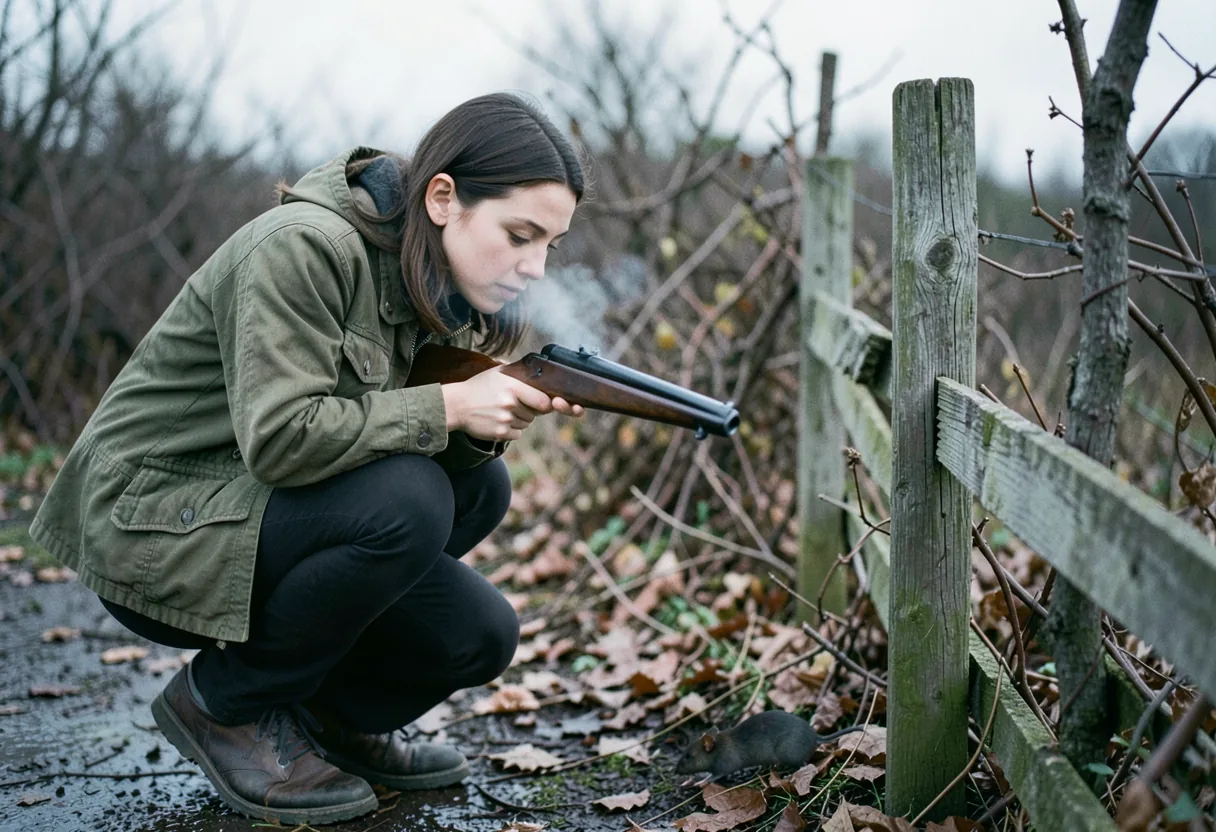
Rat shooting with an air rifle involves using a .177 or .22 caliber pellet gun, typically from 10-20 yards. Aim for the head or heart for a humane kill, ensuring safety by wearing eye protection and using a backstop to prevent ricochets.
Rat shooting with air rifle is a precise method of pest control using compressed air or CO2-powered rifles to humanely dispatch rats, often in urban or agricultural settings.
Think of it like a surgical strike with a pellet instead of a sniper rifle, you’re targeting a single rat with enough force to incapacitate it instantly, minimizing suffering and mess.
Key facts
- Air rifles used for rat shooting typically fire pellets with energies between 5 and 12 foot-pounds (ft-lbs).
- Common calibers for rat shooting include .177, .20, and .22, with .22 being preferred for larger rats or thicker hides.
- Effective range for rat shooting is generally under 30 yards, with optimal accuracy at 15-25 yards.
- Local regulations may require a license or permit for air rifle use, especially in urban areas.
01Why rat shooting with air rifle?
Air rifles are a humane and efficient tool for rat control, especially where chemical methods are restricted or undesirable. Unlike poisons, which can leave behind toxic residues or cause secondary poisoning in predators, air rifles deliver a quick, precise kill. This method is particularly valuable in environments where rats have developed resistance to traditional rodenticides or where rapid population reduction is necessary, such as barns, warehouses, or urban alleys.
The first time I really looked at rat shooting with an air rifle, I was struck by how much it resembled target shooting but with a much higher stakes. The key difference is the ethical responsibility: you’re not just hitting a target, but dispatching a living creature with minimal distress. That demands not just accuracy but also a deep understanding of rat behavior and the right equipment.
02Choosing the right air rifle for rat shooting
Not all air rifles are suited for rat shooting. The rifle must deliver enough power to ensure a clean kill while remaining manageable in close-quarters scenarios. A .22-caliber air rifle, for example, is often preferred over a .177 because it offers more stopping power and better penetration through thick fur or dense muscle. A rifle like the Gamo Whisper Fusion, which combines a silenced design with a 12 ft-lbs muzzle energy, is a solid choice for urban rat shooting.
CO2-powered rifles are popular for their consistency and quick follow-up shots, while spring-piston rifles offer higher power but require more maintenance. Precharged pneumatic (PCP) rifles, like the Browning Cynergy, provide the best balance of power and accuracy but are more expensive and require a compressed air source. Always check local laws to ensure compliance, as some regions restrict air rifle power or require permits for use.
03Optimal pellet selection for rat shooting
The right pellet is just as important as the rifle itself. For rat shooting, you’ll want pellets with a flat trajectory and high stopping power. Hollow-point or pointed pellets, such as the JSB Exact Jumbo or H&N Baracuda Hunter, are designed to expand on impact, creating a larger wound channel and ensuring a quick kill. Domed pellets, while more aerodynamic, may not deliver the same stopping force and are better suited for longer-range target shooting.
Pellet weight is another critical factor. Heavier pellets (18-25 grains) provide more energy transfer but may lose velocity faster, reducing effective range. Lighter pellets (12-15 grains) retain speed better but may not penetrate as deeply. For rats, a mid-weight pellet (15-18 grains) often strikes the best balance. Always test different pellet types at your shooting distance to ensure consistent accuracy.
04Safety and ethical considerations in rat shooting with air rifle
Rat shooting with an air rifle must always prioritize safety and ethics. Never shoot in areas where bystanders or pets could be at risk, and always ensure your backstop is secure to prevent stray pellets. In urban settings, noise discipline is crucial, silenced rifles or suppressors can help minimize disturbance. Always verify your target and what lies beyond it, as pellets can ricochet off hard surfaces.
Ethically, the goal is to dispatch the rat instantly with a well-placed shot to the head or heart. A misplaced shot can result in a wounded rat, which may suffer or escape to die later. If you’re not confident in your ability to deliver a clean kill, consider alternative methods like traps or professional pest control. For further guidance on ethical hunting practices, refer to resources like the UK Air Rifle Association’s code of conduct.
05Effective techniques for rat shooting
Rats are wary and fast-moving, so patience and stealth are essential. Scout their active areas, often near food sources like garbage bins or feed storage, and set up a concealed position with a clear line of sight. Use natural cover or camouflage to blend into the environment. Rats are most active at dawn and dusk, so plan your shooting sessions accordingly.
When taking the shot, aim for the head or the heart for an instant kill. The head is the smaller target but ensures immediate incapacitation, while the heart requires slightly better precision but is also effective. Practice regularly at known ranges to refine your accuracy. A rifle with a mounted scope, such as the Nikon Prostaff Rangescope, can significantly improve your precision at longer distances.
06Legal and environmental considerations
Before engaging in rat shooting with an air rifle, verify local regulations. Some areas require a license or permit for air rifle use, while others restrict shooting near residential zones or public spaces. Always follow the UK Air Weapon Safety Guidance, which outlines safe handling and storage practices. If rats are in a protected area or near endangered species, consult wildlife authorities before taking action.
From an environmental standpoint, air rifle shooting has minimal impact compared to chemical methods. However, always dispose of rat carcasses responsibly to avoid secondary poisoning in scavengers. Burying or incinerating the remains is often the safest approach. If rats are carrying diseases like leptospirosis, wear gloves and wash your hands thoroughly after handling them.
07Step-by-step guide to rat shooting with air rifle
- Research local laws and obtain any necessary permits.
- Select an appropriate air rifle and pellet type for your scenario.
- Scout the area to identify rat hotspots and set up a concealed shooting position.
- Practice shooting at known distances to ensure accuracy.
- Shoot at dawn or dusk when rats are most active.
- Aim for the head or heart for an instant kill.
- Dispose of carcasses safely and responsibly.
Mastering rat shooting with an air rifle requires precision, patience, and a deep respect for both safety and ethics. By choosing the right equipment, understanding rat behavior, and adhering to legal guidelines, you can effectively control rat populations while minimizing harm to the environment and other living beings.
08Frequently asked questions
What type of air rifle is best for rat shooting?
A .22 caliber air rifle with a minimum muzzle energy of 12 ft-lbs is ideal for humane rat control. The Brocock Contour or Weihrauch HW97 are popular choices. Ensure your rifle meets local legal power limits, some areas require 12 ft-lbs or higher for pest control.
How accurate must my air rifle be for rat shooting?
Accuracy within 1/2 inch at 25 yards is sufficient. Practice with rat-sized targets at various distances. Many shooters use paper plates or custom cutouts to simulate real-world conditions. Consistency matters more than extreme precision, rats move quickly, so focus on quick follow-up shots.
What are the legal considerations for rat shooting in the UK?
In the UK, you need an Air Weapon Certificate for certain areas, but not on your own land. The Police Reform and Social Responsibility Act 2011 governs airgun use. Always check local bylaws, some councils prohibit airgun use entirely. Never shoot near public paths or roads.
How do I ensure a humane kill when shooting rats?
Aim for the head or heart. A .22 caliber pellet should penetrate at least 2 inches into the body for a clean kill. Shoot from within 30 yards to ensure accuracy. Avoid shooting through glass or barriers, this reduces pellet energy and effectiveness. Always confirm the kill immediately.