
Air rifle hunting uses compressed air to propel pellets. It’s legal for small game like rabbits or squirrels in many areas, with laws varying by region. Use a .177 or .22 caliber rifle for optimal power. Aim for quick, ethical kills by targeting vital organs. Always check local regulations before hunting.
Air rifle hunting techniques are specialized methods and strategies for using air rifles to ethically and effectively harvest small game.
Think of air rifle hunting like a precision chess match where each pellet is a pawn, and the hunter is the grandmaster calculating wind resistance, distance, and pellet drop like opening moves.
Key facts
- Air rifles can be effective for hunting small game up to 50 yards, with some high-powered models reaching 100 yards.
- Pellet selection is critical, with heavier pellets offering more energy transfer but requiring more power to maintain velocity.
- Ethical air rifle hunting prioritizes quick, humane kills, necessitating precise shot placement.
- Many regions regulate air rifle hunting with specific laws and licensing requirements.
01How to Shoot an Air Rifle Accurately
Accuracy in air rifle hunting starts with proper stance and grip. Stand with your feet shoulder-width apart, slightly angling your body to reduce wind resistance. Grip the rifle firmly but not tightly, using your dominant hand to control the trigger and your off-hand to support the fore-end. Rest your cheek against the stock consistently to maintain a steady sight picture.
The first time I really looked at the impact of trigger control, I noticed how even a slight anticipatory jerk could throw off a shot. Practice trigger squeeze until it becomes a smooth, surprise-free motion. Breathe naturally, exhaling partially before taking the shot, and squeeze the trigger without disturbing your aim. Remember, air rifles are sensitive to movement, so practice steadying techniques like resting your elbow on a solid surface or using a bipod.
Sight alignment and focus are crucial. With open sights, align the rear notch and front post so they form a “V” around your target. With scopes, focus on the crosshairs, not the target. Parallax error, where the target and crosshairs appear at different distances, can be minimized with a good quality scope or by practicing at various ranges.
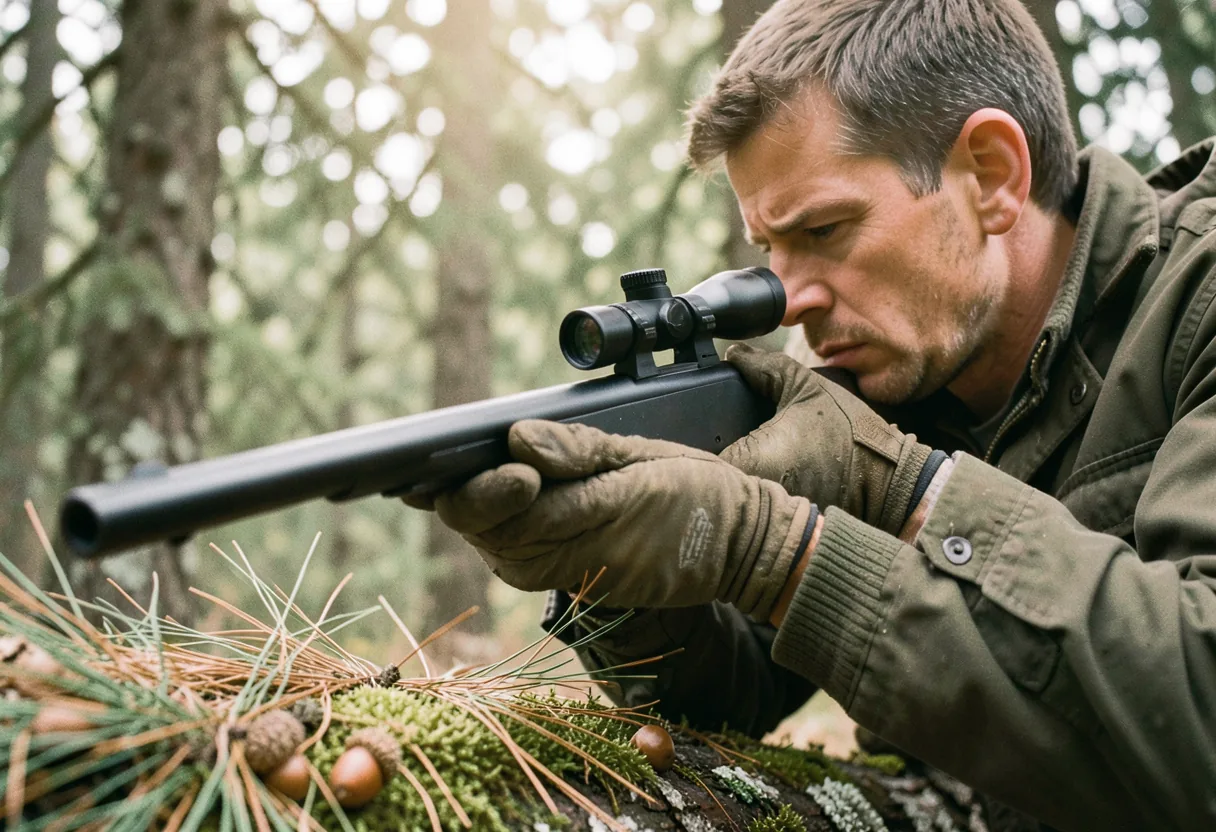
02Air Rifle Hunting Techniques for Small Game
Air rifle hunting techniques vary by game, but some principles are universal. For squirrels and rabbits, use stalking techniques to get within 30-40 yards. A well-placed pellet to the head or heart/lung area is essential for a humane kill. Rats and other pests can be hunted with similar techniques, but always prioritize safety and legality. Groundhogs require more power, typically a .22 caliber or larger, and shots should be taken at closer ranges due to their tougher hide.
When hunting rabbits, aim for the head or the shoulder to ensure a clean kill. Rabbits are skittish, so patience and stealth are key. Use natural cover to hide your approach, and move slowly to avoid spooking them. For squirrels, focus on their predictable patterns, such as feeding times and routes. A well-placed shot to the head is most effective, but a heart/lung shot can also be lethal if the squirrel is within range.
03Air Rifle Hunting Pellet Selection
Pellet selection is one of the most important air rifle hunting techniques. Heavier pellets transfer more energy, making them ideal for larger game, but they require more power to maintain velocity. Lighter pellets are faster but may not have the stopping power needed for a clean kill. The ideal pellet for most small game is a mid-weight lead or alloy pellet, such as the .22 caliber 14.3-grain pellet, which offers a good balance of speed and energy transfer.
Domed pellets are more aerodynamic and maintain velocity better than flat-nose or round-nose pellets, making them a popular choice for hunting. However, flat-nose pellets can be more effective at close ranges, as they expand on impact, creating a larger wound channel. Always test different pellets at the range to see which performs best with your specific rifle and scope setup.
04Ethical Air Rifle Hunting Practices
Ethical air rifle hunting involves more than just accuracy; it requires a deep respect for the game and the environment. Always follow local regulations and obtain the necessary licenses and permits. Know the legal hunting seasons and bag limits, and never take more than you need. Ethical hunting also means ensuring a quick, humane kill. Avoid shooting at moving targets or at long ranges where accuracy may be compromised.
Respect private property and public lands by following leave-no-trace principles. Pack out all trash, including spent pellets and empty pellet tins. Be mindful of other hunters and recreational users, and always prioritize safety. Wear high-visibility clothing, and never point your air rifle at anything you do not intend to shoot. Store your air rifle unloaded and in a secure case when not in use.
05Air Rifle Hunting Safety Guidelines
Safety is paramount in air rifle hunting. Always treat your air rifle as if it is loaded, and never point it at anything you do not intend to shoot. Keep your finger off the trigger until you are ready to fire, and always be aware of your surroundings. Know what is beyond your target to ensure you are not endangering others.
Wear appropriate safety gear, including ear and eye protection. Air rifles can be loud, and pellets can ricochet or shatter, posing a risk to your hearing and vision. Always inspect your air rifle before use to ensure it is in good working condition. Check for signs of wear or damage, and replace any parts that are not functioning properly.
06Air Rifle Hunting Scope Mounting
Proper scope mounting is essential for accurate air rifle hunting. A well-mounted scope ensures consistent eye relief and sight alignment, which are critical for precision shooting. Most air rifles come with scope mounts or rail systems, but you may need to purchase additional mounting hardware depending on your rifle and scope.
The first step in scope mounting is to ensure the scope is level. Use a bubble level to align the scope with the rifle, and adjust the mounting rings as needed. Tighten the scope rings gradually and evenly to avoid damaging the scope or the rifle. Once the scope is mounted, sight it in at a known distance, typically 25 or 50 yards, to ensure accuracy. Remember, even a slight misalignment can significantly impact your shooting precision.
07Step-by-Step Guide to Air Rifle Hunting Success
- Research and understand local laws and regulations regarding air rifle hunting.
- Choose the right air rifle and pellets for your target game.
- Practice shooting at the range to improve accuracy and familiarity with your rifle.
- Plan your hunt, including scouting the area and understanding the game’s behavior and patterns.
- Prioritize safety by wearing appropriate gear and following all safety guidelines.
- Take ethical shots, aiming for quick, humane kills.
- Respect the environment and other hunters by following leave-no-trace principles.
Mastering air rifle hunting techniques requires practice, patience, and a deep respect for the sport and the game. By following these guidelines and continuously honing your skills, you can become a proficient and ethical air rifle hunter.
08Frequently asked questions
What's the effective range for hunting with an air rifle?
Most modern air rifles are accurate up to 50 yards for small game like squirrels or rabbits. Beyond that, accuracy drops sharply due to pellet drop and wind drift. For larger game, keep it under 35 yards to ensure ethical kills. High-velocity rifles like the Benjamin Marauder can extend this slightly, but always practice at your maximum hunting distance.
How do I choose the right pellet for air rifle hunting?
Use lead-free pellets if hunting in areas with restrictions, but for general use, lead pellets are more accurate. Domed pellets fly flatter and are better for longer shots, while pointed pellets penetrate better. For example, the 17.5-grain .22 caliber pellet works well for small game, while heavier 25-grain pellets suit larger game.
What's the best technique for shooting small game with an air rifle?
Aim for the head or the heart-lung area for a quick, ethical kill. Use a bipod or rest for stability, and always account for wind. Practice breathing control to steady your shot. For moving targets, lead your shot slightly, but keep it within your effective range to maintain accuracy.
Are air rifles legal for hunting in all states?
No, laws vary by state. Some states like Texas allow air rifles for small game with no restrictions, while others like California require a hunting license and have specific regulations. Always check your state's Fish and Wildlife website for the latest rules. For example, New York allows air rifles for small game but bans them for big game.