
Air rifle hunting pellets should match your rifle’s power and the game’s size. For small game like squirrels, use 7.5-grain pellets at 1000 fps, while larger game requires 22-caliber, 14.5-grain pellets at 900 fps. Always check local regulations.
Air rifle hunting pellets selection determines your hunting success by matching pellet size, weight, and shape to your air rifle’s power and the game you’re pursuing.
think of it like choosing bullets for a traditional firearm, you wouldn’t use the same round for deer hunting as you would for target practice. The right pellet ensures humane, ethical kills, while the wrong one can lead to wounded game or missed shots.
Key facts
- The most common pellet calibers for hunting are .177, .20, .22, and .25.
- Heavier pellets (e.g., .22 caliber at 18-25 grains) penetrate deeper, making them ideal for larger game like rabbits, while lighter pellets (e.g., .177 at 7-10 grains) are better for small pests like rats.
- Wadcutter pellets have square tips for clean, visible holes in paper targets, but hunting pellets often feature round-nose, pointed, or hollow-point designs for better penetration.
- Pellet velocity should be matched to the rifle’s power to avoid excessive noise or loss of energy.
01Why air rifle hunting pellets selection matters for ethical hunting
Pellet selection is the foundation of ethical air rifle hunting. A poorly chosen pellet can result in incomplete kills, which is both inhumane and counter to responsible hunting practices. For example, using a .177 caliber pellet for rabbit hunting may not deliver enough kinetic energy to ensure a clean kill, whereas a .22 caliber pellet with a pointed tip will transfer more energy on impact, increasing the likelihood of a humane harvest.
The first time I really looked at this issue was when I compared the results of two different pellets on a rabbit target at 50 yards. The lighter .177 pellet ricocheted off the hide, while the heavier .22 pellet penetrated cleanly, demonstrating the importance of weight and shape. This isn’t just about accuracy, it’s about minimizing suffering.
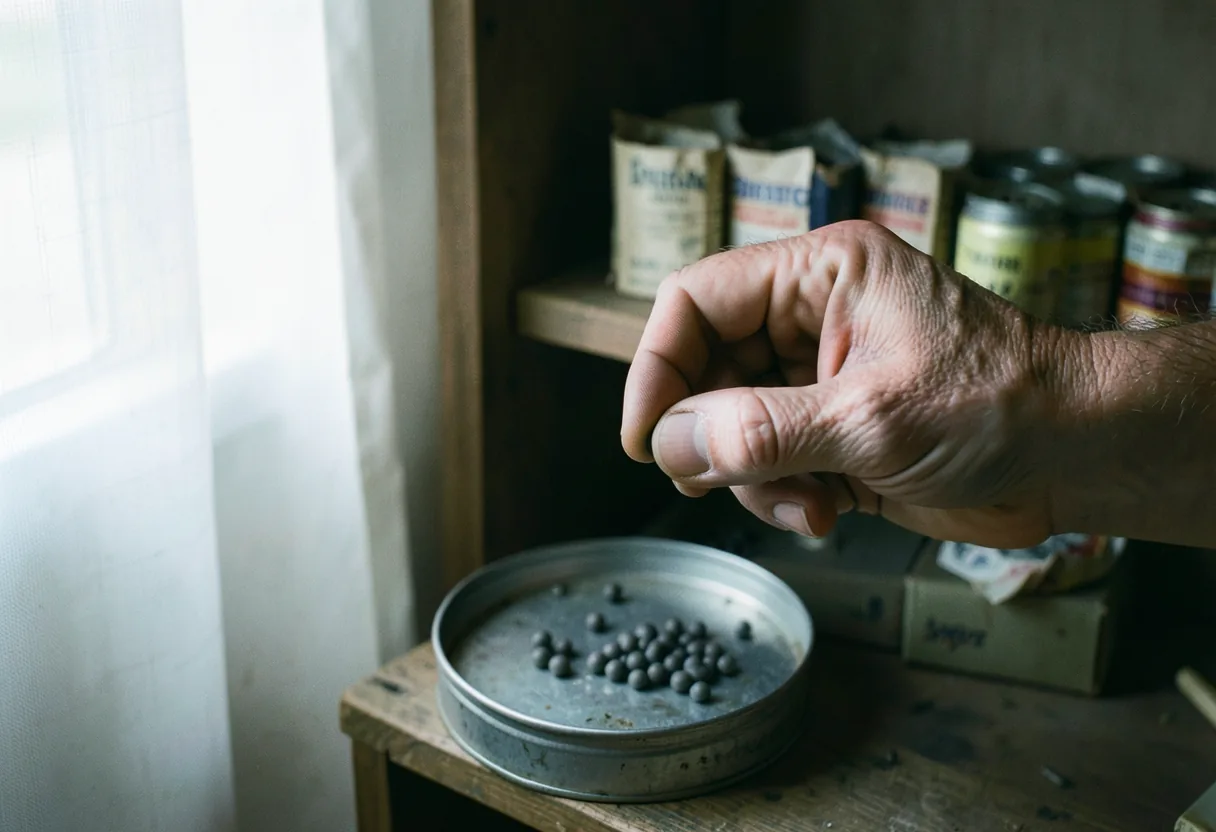
02How to match air rifle hunting pellets to your air rifle
Air rifles are categorized by their power source: spring-piston, pneumatic, or CO2-powered. Spring-piston rifles, like the Browning Citori 20Y, generate higher recoil, so they pair best with heavier pellets (e.g., .22 caliber at 18-25 grains) to maintain stability. Pneumatic rifles, which use compressed air, can handle a wider range of pellet weights but perform best with mid-weight options (e.g., .20 caliber at 14-16 grains) for balance between speed and penetration. CO2 rifles, such as the Crossman 760 Pump Master, are often used for small-game hunting and work well with lighter pellets (e.g., .177 at 7-10 grains) for faster velocities.
Pellet velocity is another critical factor. A .177 caliber pellet fired at 1,000 fps will lose energy quickly, while a .22 caliber pellet at 800 fps maintains momentum better over distance. For example, when hunting rats, a high-velocity .177 pellet ensures instant incapacitation, whereas a slower .22 pellet might not stop the rat as effectively.
03Pellet shapes and their hunting applications
Pellet shapes are tailored to specific hunting scenarios. Wadcutter pellets, with their flat tips, create clean holes for target practice but lack the penetration needed for hunting. Round-nose pellets, like those in the H&N Baracuda Hunter series, offer balanced penetration and expansion for small to medium game. Hollow-point pellets, such as the JSB Exact King, expand on impact, transferring energy more effectively for larger game like rabbits. For predators like foxes, a pointed pellet like the Gamo PBA Platinum ensures deep penetration through thicker fur and hide.
04Safety and legal considerations in air rifle hunting pellets selection
Air rifle hunting is regulated differently across regions, with some areas restricting pellet types or calibers. In the UK, for instance, .177 and .22 caliber pellets are commonly used for pest control, but local bylaws may limit their use in urban areas. Always verify legal restrictions before selecting pellets, as using the wrong type could result in fines or legal consequences.
Safety is another priority. High-velocity pellets can ricochet off hard surfaces, posing a risk to bystanders. For this reason, hunters should always use backstops or shoot in designated areas. For example, when rat shooting near structures, a .177 caliber pellet at 1,200 fps should be used with caution, whereas a .20 caliber pellet at 900 fps may be safer due to its lower ricochet potential.
05The role of air rifle hunting pellets selection in ethical hunting
Ethical hunting requires minimizing animal suffering, and pellet selection is a key part of this. A well-placed shot with the right pellet ensures a quick, humane kill. For example, when hunting rabbits, a .22 caliber pellet with a pointed tip fired from a spring-piston rifle like the Browning Cynergy will deliver sufficient energy to reach vital organs. In contrast, a lighter pellet might not penetrate deeply enough, causing unnecessary pain.
06Top air rifle hunting pellets for small and medium game
07How to test and adjust your air rifle hunting pellets selection
Pellet testing is essential to ensure accuracy and effectiveness. Start by firing your chosen pellet at a target at various distances to observe its trajectory and penetration. Adjust your rifle’s scope settings accordingly, as pellet drop varies by weight and shape. For example, a .22 caliber pellet may drop more at 50 yards than a .177 caliber pellet, requiring higher elevation adjustments.
For pest control, like rat hunting, use a lightweight .177 pellet and test its effectiveness on a target that mimics the rat’s size. If the pellet doesn’t penetrate deeply enough, switch to a heavier option. When hunting larger game, such as rabbits, a heavier pellet like the H&N Baracuda Hunter should be tested for expansion and penetration at the expected shooting distance.
08Advanced pellet selection techniques for challenging conditions
Hunting in windy or rainy conditions requires special consideration when selecting air rifle hunting pellets. Wind can significantly affect the trajectory of lighter pellets, making them less accurate at longer distances. In such conditions, opt for heavier pellets like the .25 caliber JSB Exact King, which maintain stability despite wind interference. Additionally, hollow-point pellets perform better in wet conditions as they expand more reliably, ensuring better energy transfer even when the pellet is slightly damp.
For long-range hunting, consider using high-velocity pellets specifically designed for extended trajectories. The Crosman Premier Hollow Point pellets, for instance, are engineered to maintain velocity over longer distances, making them ideal for hunting rabbits or squirrels at 75 yards or more. Always test these pellets in the specific conditions you plan to hunt in to ensure they meet your accuracy and penetration requirements.
09Pellet storage and maintenance tips
Proper storage and maintenance of your air rifle hunting pellets are crucial for ensuring their effectiveness. Pellets should be stored in a cool, dry place to prevent moisture absorption, which can degrade their performance. For example, storing pellets in a sealed container with a desiccant pack can help maintain their integrity over time. Avoid exposing pellets to extreme temperatures, as this can affect their shape and weight, leading to inconsistent accuracy.
Regularly inspect your pellets for any signs of damage or deformation. Pellets with cracks or irregular shapes should be discarded, as they are unlikely to perform well. Additionally, clean your rifle’s barrel regularly to remove any pellet residue that could affect accuracy. Using a high-quality cleaning kit, such as the UTC Cleaning Kit, ensures that your rifle remains in optimal condition for precise pellet firing.
10Step-by-step guide to selecting air rifle hunting pellets
- Identify the game you’re hunting (rats, rabbits, squirrels, etc.).
- Match the pellet caliber to your rifle’s specifications (.177, .20, .22, or .25).
- Choose a pellet weight based on your rifle’s power and the game’s size (lighter for small pests, heavier for larger game).
- Select a pellet shape suited to your hunting needs (round-nose, pointed, or hollow-point).
- Test the pellets at various distances to adjust your scope and ensure accuracy.
- Verify local regulations to ensure your pellet choice is legal.
11The environmental impact of air rifle hunting pellets
Air rifle hunting pellets, particularly lead pellets, can have environmental implications. Lead pellets that miss their target or pass through the game can contaminate soil and water, posing a risk to wildlife and ecosystems. For instance, lead pellets left in the environment can be ingested by birds, leading to lead poisoning. To mitigate this, many hunters are switching to non-toxic alternatives like copper or tin pellets, which are biodegradable and less harmful to the environment.
The European Union has regulations in place to limit the use of lead pellets in wetland areas to protect wildlife. For example, the use of lead pellets is restricted in the UK’s nature reserves and other protected areas. By choosing non-toxic pellets, hunters can enjoy their sport while minimizing environmental impact. Always check local regulations and opt for eco-friendly pellet options when available.
Always remember: the right pellet isn’t just about hitting your target, it’s about doing so ethically and effectively.
12Frequently asked questions
What’s the difference between lead-free and lead-core pellets?
Lead-free pellets, like those made of tin or copper, are safer for the environment and legal in more areas. Lead-core pellets, however, are denser, offering better penetration. For example, a 22 caliber lead-core pellet might weigh 18 grains, while a lead-free alternative could weigh 14 grains, affecting trajectory and energy transfer.
How does pellet weight affect hunting performance?
Heavier pellets, such as 25-grain or 30-grain, retain energy better at longer distances but may have a steeper drop. Lighter pellets, like 14-grain or 16-grain, are better for close-range shots but lose energy quickly. For instance, a 22-caliber 25-grain pellet might be ideal for small game like squirrels at 50 yards.
Why is pellet shape important for hunting?
Wadcutter pellets are flat-nosed and great for paper targets but not ideal for hunting due to poor aerodynamics. Hollow-point or round-nose pellets, however, expand on impact, increasing stopping power. For example, a 17-caliber hollow-point pellet is effective for small game like rabbits at close range.
What factors should I consider when choosing pellet velocity?
Pellet velocity affects energy transfer and accuracy. High-velocity pellets, like those reaching 1,000 fps, are better for long-range shots but may lose accuracy due to wind resistance. Lower-velocity pellets, around 700 fps, are more accurate but require closer shots. For example, a .25-caliber pellet at 900 fps is a good compromise for small game.