
Clean your air rifle barrel by first removing the barrel from the gun. Use a cleaning rod with a patch soaked in hoppes gun cleaner to scrub the inside. Follow with a dry patch, then apply a light coat of gun oil. Repeat until patches come out clean.
Cleaning an air rifle barrel is a critical maintenance task that ensures accuracy, longevity, and safety by removing fouling and residue from repeated use.
Think of it like flossing your teeth, just as plaque buildup affects dental health, powder residue and debris in a barrel degrade shooting performance over time.
Key facts
- The barrel is the most performance-sensitive part of an air rifle, and its condition directly impacts accuracy and velocity.
- Most barrels require cleaning after every 200-300 shots, or immediately if you notice velocity drops or erratic grouping.
- Using the wrong cleaning tools can scratch the barrel’s interior, permanently reducing its effectiveness.
- Some high-end air rifles, like those by Weihrauch, have specialized cleaning recommendations due to their unique bore finishes.
01What you need
- A dedicated air rifle cleaning kit (e.g., the Utah-made Tipton Best Gun Vise) or a basic kit with a 12-inch cleaning rod, proper brushes, and patches
- Barrel cleaning solvent specifically for air rifles (e.g., Hoppe’s No. 9 or Break-Free CLP)
- Mops and brushes sized to your barrel’s caliber (e.g., .177, .22, .25)
- Microfiber cloths for exterior cleaning
- Gloves to protect your hands from solvents
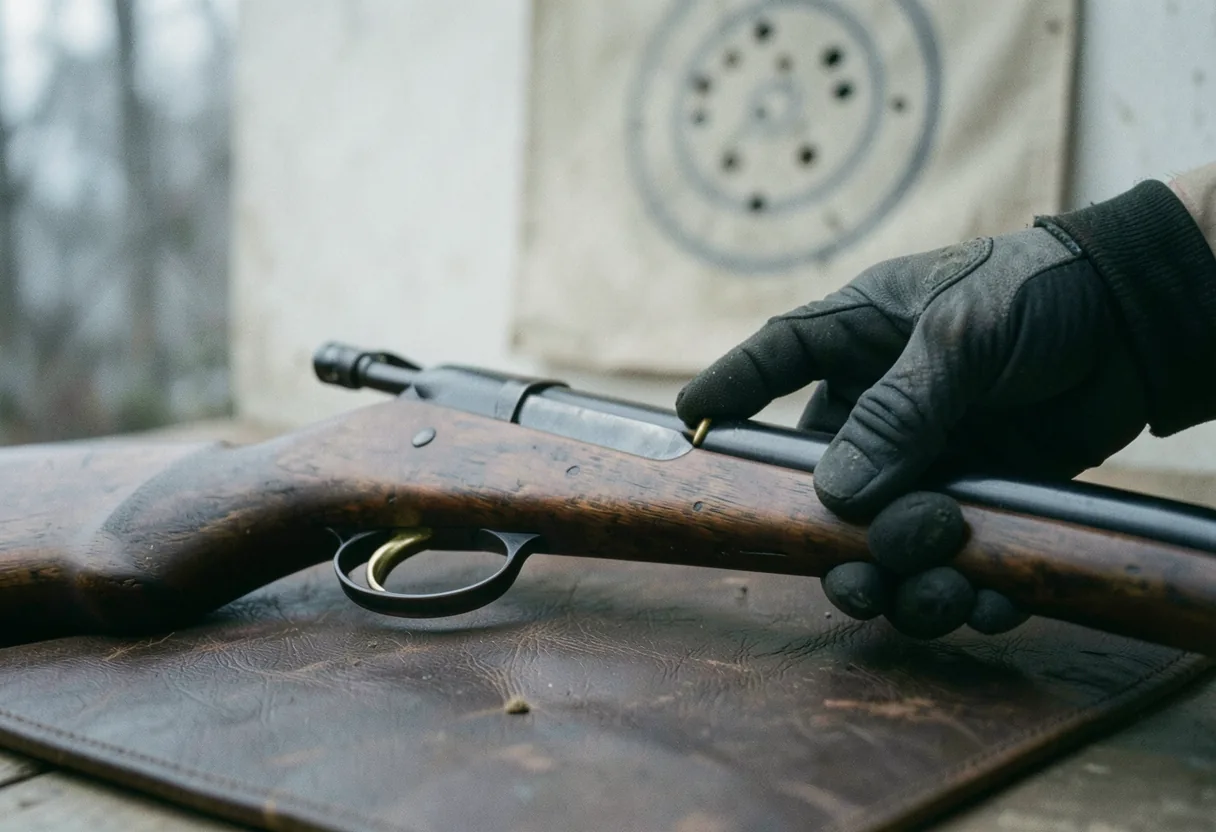
02The step-by-step cleaning process
- Disassemble the air rifle according to the manufacturer’s instructions, ensuring the barrel is clear of any obstructions. Never point the barrel at anything you don’t intend to destroy.
- Attach a dry patch to the cleaning rod and run it through the barrel several times to remove loose debris. This step prevents pushing grime deeper with solvents.
- Apply a few drops of solvent to a clean patch or mop and push it through the barrel. Let it sit for 5-10 minutes to dissolve carbon buildup.
- Brush the barrel using a bore brush matched to your caliber. Push it through 5-10 times, then pull it back to remove loosened residue. Avoid twisting the brush, as this can cause scratching.
- Repeat steps 2-4 with fresh patches until they emerge clean. Stubborn fouling may require additional solvent soaking or a dedicated cleaning rod like the Pro-Shot Flex Cleaning Cable.
- Dry the barrel thoroughly with clean patches to remove all moisture and solvent residue. A dry patch should come out clean and free of solvent smell.
- Lubricate the barrel lightly if recommended by the manufacturer (e.g., with Air Rifle Lubrication Guide“>a silicone-based lubricant), but avoid excess oil, which can attract debris.
- Reassemble the air rifle, ensuring all parts are properly seated and the barrel is clear before testing.
03Common mistakes to avoid
One of the biggest errors I see is using the wrong brush size. A .177-caliber brush won’t effectively clean a .22 barrel, and vice versa. Always match your tools to your rifle’s specifications. Another mistake is rushing the process, letting solvents sit ensures thorough cleaning without damaging the barrel. Finally, never use household cleaning products like WD-40; they leave residues that harm accuracy and velocity.
04How often should you clean an air rifle barrel?
Frequency depends on usage and ammunition type. Pellets leave less residue than lead-free alloys, but all barrels benefit from periodic cleaning. The first time I really looked at fouling under a microscope, I was shocked by how much buildup even 100 shots could leave. For competitive shooters, cleaning after every range session is ideal. For casual plinkers, every 200-300 shots suffices. Always inspect your groups, if accuracy degrades, it’s time to clean.
05How to clean an air rifle barrel without a cleaning kit
In a pinch, you can improvise with a cotton swab, rubbing alcohol, and a thin, flexible rod (like a plastic-coated wire). However, this method lacks the precision of proper tools. For long-term maintenance, invest in a dedicated Air Rifle Cleaning Kit Recommendations“>cleaning kit like the Umarex Air Rifle Cleaning Kit, which includes brushes, patches, and solvents tailored to air guns.
06When to replace your cleaning tools
Brushes wear out over time, especially if used on stubborn fouling. Replace them when bristles fray or bend, as they can scratch the barrel. Patches should be discarded after a single use to avoid recontaminating the bore. A well-maintained cleaning kit ensures consistent results and protects your investment in the air rifle itself.
07Choosing the right cleaning solvent for your air rifle barrel
Not all solvents are created equal. For air rifles, avoid harsh chemicals that can damage the barrel’s interior or leave residues. Hoppe’s No. 9 is a popular choice for its effectiveness in dissolving carbon buildup without harming the metal. Break-Free CLP is another excellent option, as it cleans, lubricates, and protects in one step. Always follow the manufacturer’s guidelines for solvent compatibility with your specific air rifle model.
08Deep cleaning for neglected air rifle barrels
If you’ve let your air rifle barrel go without cleaning for an extended period, a deeper approach may be necessary. Start by soaking the barrel with a heavy-duty solvent like Martini-Henry-style fouling remover for several hours. After soaking, use a stiff nylon brush to scrub the interior gently. Repeat the process until the patches come out clean. In extreme cases, professional cleaning services can restore heavily fouled barrels to like-new condition.
09Understanding barrel fouling and its impact on air rifle performance
Barrel fouling occurs when residues from pellets, lubricants, and environmental contaminants build up inside the barrel. Over time, this fouling can create irregularities in the bore, leading to reduced accuracy and velocity. The type of fouling varies: lead-free pellets often leave copper or alloy deposits, while lubricated pellets can leave oily residues. Regular cleaning prevents these deposits from hardening, ensuring consistent performance.
For example, competitive shooters often notice a significant drop in accuracy after just 50-100 shots if they neglect cleaning. This is because even minor fouling disrupts the pellet’s seal in the barrel, causing turbulence and inconsistent pressure. By maintaining a clean barrel, you ensure that each shot follows the same trajectory, improving grouping and precision.
Additionally, some air rifles with specialized coatings, such as those by Weihrauch, may require specific cleaning protocols. These coatings are designed to reduce fouling but still need proper maintenance to function effectively. Always refer to your rifle’s manual for manufacturer-recommended cleaning practices.
10Final tip
Always store your air rifle in a dry environment after cleaning to prevent moisture buildup. A Air Rifle Storage Preparation“>dedicated gun safe with silica gel packs helps control humidity and keeps your rifle in top condition.
11Frequently asked questions
Why is cleaning an air rifle barrel necessary?
Residue from propellant or lubricant builds up quickly. For instance, lead pellets leave deposits that can affect accuracy and cause fouling. Regular cleaning, say every 100-200 shots, prevents this. Use a proper cleaning rod and patches soaked in a solvent designed for air rifles.
What tools are essential for cleaning an air rifle barrel?
You’ll need a cleaning rod, bore brush, cleaning patches, and a solvent. A rod with a handle and a caliber-specific brush are musts. For example, a .177 caliber rifle needs a .177 brush. Avoid metal brushes, they can scratch the barrel. Use a pull-through method to avoid damaging the rifling.
How often should you clean the barrel of a spring-powered air rifle?
Spring-powered rifles need more frequent cleaning than CO2 or PCP rifles. Aim for every 50-100 shots. The spring’s lubricant can leave residue that mixes with propellant fouling. Use a dedicated solvent for spring guns to break down the grease and lead deposits effectively.
Can you use gun cleaning solvents for an air rifle?
Yes, but choose carefully. Air rifle barrels are often made of different materials than firearms. Solvents like Hoppe’s No. 9 can work, but they’re harsh. Opt for solvents like Ballistol or specialized air rifle cleaners. Always follow the manufacturer’s guidelines to avoid damaging the barrel.