
Air rifle pellets have three main head shapes: wadcutter, domed, and pointed. Wadcutters are flat, great for paper targets. Domed pellets, like the .177 caliber, offer better aerodynamics. Pointed pellets, such as the hollow-point design, expand on impact for hunting.
Air rifle pellet head shapes explained refer to the distinct geometric profiles engineered to optimize pellet performance for different shooting applications.
Imagine trying to thread a needle with a bowling ball versus a sewing needle, your success depends entirely on the front end’s shape. Similarly, the head shape of an air rifle pellet determines how smoothly it travels through the air, enters the barrel, and strikes its target.
Key facts
- Head shapes impact accuracy, penetration, and trajectory.
- Common shapes include wadcutter, hollow point, domed, and pointed.
- Wadcutter pellets create clean holes for paper targets.
- Domed pellets offer better aerodynamic efficiency.
01Why air rifle pellet head shapes explained matter for precision
Pellet head shapes directly influence how the projectile interacts with air resistance and the rifle’s barrel. A mismatched shape can cause instability mid-flight or inconsistent grouping on the target. The first time I really looked at pellet head shapes under a magnifying glass, I noticed how tiny variations in the nose geometry created vastly different flight characteristics. For example, a wadcutter’s flat face makes it ideal for paper targets by cutting clean holes, whereas a domed pellet’s rounded tip reduces drag for long-range accuracy.
Pellet manufacturers design these shapes to address specific use cases. Competition shooters often prefer wadcutters for their predictable punch-through paper, while hunters opt for hollow points or pointed tips to maximize penetration. The exact shape can even affect how the pellet seats in the barrel, which is why some rifles exhibit better accuracy with certain head profiles than others.
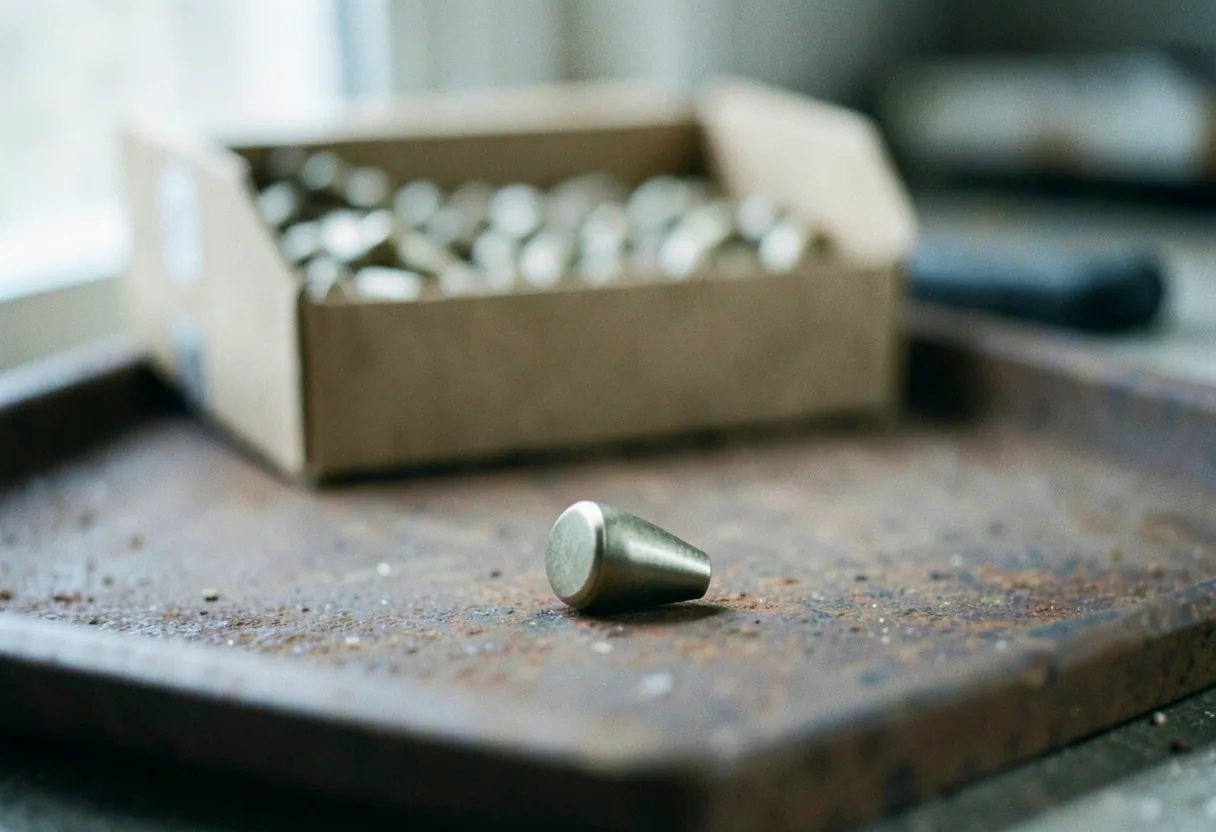
02Common air rifle pellet head shapes explained in detail
Wadcutter pellets have a flat nose and straight sides, making them excellent for paper targets due to their clean-cut entry. A classic example is the H&N Baracuda Match wadcutter, which leaves precise holes that are easy to score. Domed pellets, like the JSBSpeed JSB Exact RS, feature a rounded front that minimizes air resistance for tighter groups at longer distances. Hollow points are designed to expand on impact, ideal for small-game hunting, while pointed pellets (such as the Hornady NTX) penetrate deeper into soft targets.
The choice of head shape also affects pellet velocity and energy transfer. For instance, pointed pellets may lose some energy to drag but compensate with deeper penetration. Conversely, domed pellets maintain higher velocity over distance but may not penetrate as deeply. This trade-off is why hunters and target shooters often stock multiple shapes for different scenarios.
03How air rifle pellet head shapes explained affect performance
Head shapes influence three critical factors: accuracy, trajectory, and energy delivery. A domed pellet’s aerodynamic efficiency means it stays on target longer, while a wadcutter’s flat face ensures consistent strike patterns. The table below compares key performance metrics across common head shapes:
For example, the H&N Baracuda Match wadcutter is a favorite among competitive shooters for its predictable accuracy, while the Hornady NTX pointed pellet is preferred by hunters for its deep penetration. The exact performance also depends on the rifle’s caliber and barrel twist rate, which is why pellet manufacturers offer different shapes for .177, .22, and .25 calibers.
04Matching air rifle pellet head shapes to your shooting style
The best head shape depends on your primary use. Target shooters benefit from wadcutters or domed pellets for clean, tight groupings. Hunters should consider hollow points or pointed pellets for deeper penetration. The table below outlines recommended head shapes for common shooting applications:
For example, silhouette shooters often choose domed pellets like the JSBSpeed JSB Exact RS because of their consistent flight path, while hunters rely on hollow points for humane kills. The exact choice also depends on the target’s distance and size, which is why many shooters experiment with different shapes to find the best fit for their needs.
05Testing air rifle pellet head shapes explained
To find the best head shape for your rifle, conduct controlled tests. Start by firing each pellet type at varying distances and comparing group size and penetration. Note how the pellet’s shape affects velocity using a chronograph. For example, you might find that a domed pellet groups tighter at 50 yards, while a pointed pellet penetrates deeper at 100 yards.
Testing also involves observing how the pellet interacts with your rifle’s barrel. Some head shapes may exhibit less fouling or cleaner ejection, which can prolong barrel life and accuracy. For instance, wadcutters tend to leave less residue in the barrel than pointed pellets, making them a practical choice for high-volume shooting sessions.
06The role of pellet material in head shape effectiveness
The material of the pellet, often a lead alloy, also plays a crucial role in how head shapes perform. Softer alloys deform more easily, making hollow points expand better on impact, while harder alloys maintain their shape for tighter groupings. For example, the H&N Baracuda Match wadcutter uses a harder alloy to ensure consistent accuracy, whereas the Hornady NTX pointed pellet employs a softer alloy to enhance penetration.
Environmental factors like temperature and humidity can also affect pellet performance. Cold weather may make pellets harder, altering their deformation and penetration characteristics. Shooters in varying climates often adjust their pellet choices seasonally to maintain optimal performance. For instance, a hunter in a cold climate might switch to a softer alloy pointed pellet to ensure deep penetration in winter conditions.
07Advanced considerations for air rifle pellet head shapes explained
Beyond basic head shapes, some manufacturers offer specialized designs like the JSBSpeed JSB Diabolo Exact with micro-grooves that improve stability. These advanced shapes are often tailored for specific rifles or shooting disciplines. For example, the JSB Diabolo Exact is designed for high-velocity rifles, reducing drag and improving long-range accuracy.
Custom pellet loading is another advanced consideration. Some shooters use reloading tools to modify pellet head shapes for unique applications. This practice is more common among competitive shooters who fine-tune their pellets for specific targets or conditions. For instance, a silhouette shooter might slightly alter the domed shape to improve flight characteristics at long distances.
The key takeaway is that understanding air rifle pellet head shapes explained empowers you to make informed choices based on your specific shooting needs. Experiment with different shapes to find the optimal balance of accuracy, trajectory, and penetration for your rifle and targets.
08Frequently asked questions
What are the main types of air rifle pellet head shapes?
The primary head shapes are flat, round, and pointed. Flat heads are ideal for target shooting due to their stability and accuracy. Round heads, like the Nosler Ballistic Tip, offer better aerodynamics for long-range shots. Pointed heads, such as the Hornady V-Max, are designed for hunting and penetration.
How does pellet head shape affect accuracy?
Flat heads provide a larger surface area, reducing yaw and improving accuracy at shorter distances. Round heads minimize air resistance, maintaining trajectory over longer ranges. Pointed heads can be less stable but are better for hitting targets at extended distances.
Which pellet head shape is best for hunting?
Pointed heads, such as the GS Custom Bullets, are preferred for hunting due to their ability to penetrate deeper. Flat heads are less effective for hunting but are excellent for target practice. Round heads strike a balance but are typically used for long-range target shooting.
Can I use different pellet head shapes in the same rifle?
Yes, but switching shapes may require adjusting your rifle's sight or scope settings. Flat heads need less tuning for short-range accuracy, while pointed heads may need more fine-tuning for hunting. Always test different shapes to see what works best for your specific rifle and shooting style.