
Air rifle target shooting for beginners starts with choosing the right .177 caliber rifle, like the Ruger 10/22, which offers accuracy and affordability. Practice at 10 meters, using a simple black bullseye target. Learn proper stance, grip, and breathing control, aiming for consistent groups. Join a local club for coaching and safety guidelines.
Air rifle target shooting for beginners is a precision sport where participants use compressed air or CO2 to propel pellets at a target, testing accuracy and control.
Imagine trying to thread a needle while standing 10 meters away. That’s the kind of focus and precision air rifle target shooting demands, only instead of a thread, you’re lining up a tiny pellet with a bullseye.
Key facts
- Air rifles typically fire pellets at velocities between 400-1,000 feet per second.
- Common target distances for beginners range from 10 to 33 yards.
- Pellet weights vary from 7 to 14 grains, affecting trajectory and accuracy.
- Most beginner air rifles use either spring-piston or CO2 mechanisms.
01How do I start air rifle target shooting for beginners?
Begin by choosing the right air rifle. A spring-piston rifle, like the Crosman 1077, is a solid choice for beginners due to its affordability and simplicity. These rifles use a coiled spring to compress air, firing the pellet when the trigger is pulled. The first time I handled one, I was struck by how the spring’s tension translated directly into the shot’s power, a tactile feedback that helps build muscle memory.
Alternatively, CO2-powered rifles, like the Beeman P1, offer consistent power without the recoil of spring-piston models. They’re ideal for shooters who prioritize ease of use and precision. However, CO2 can be sensitive to temperature changes, so keep that in mind if you plan to shoot outdoors in varying climates.
Next, invest in a basic safety kit: eye protection (like the Allen Company Safety Glasses), ear protection, and a pellet trap to catch spent pellets safely. A good beginner’s target is a simple paper target with clear concentric circles, available at most sporting goods stores or online.
02What are the essential air rifle target shooting techniques for beginners?
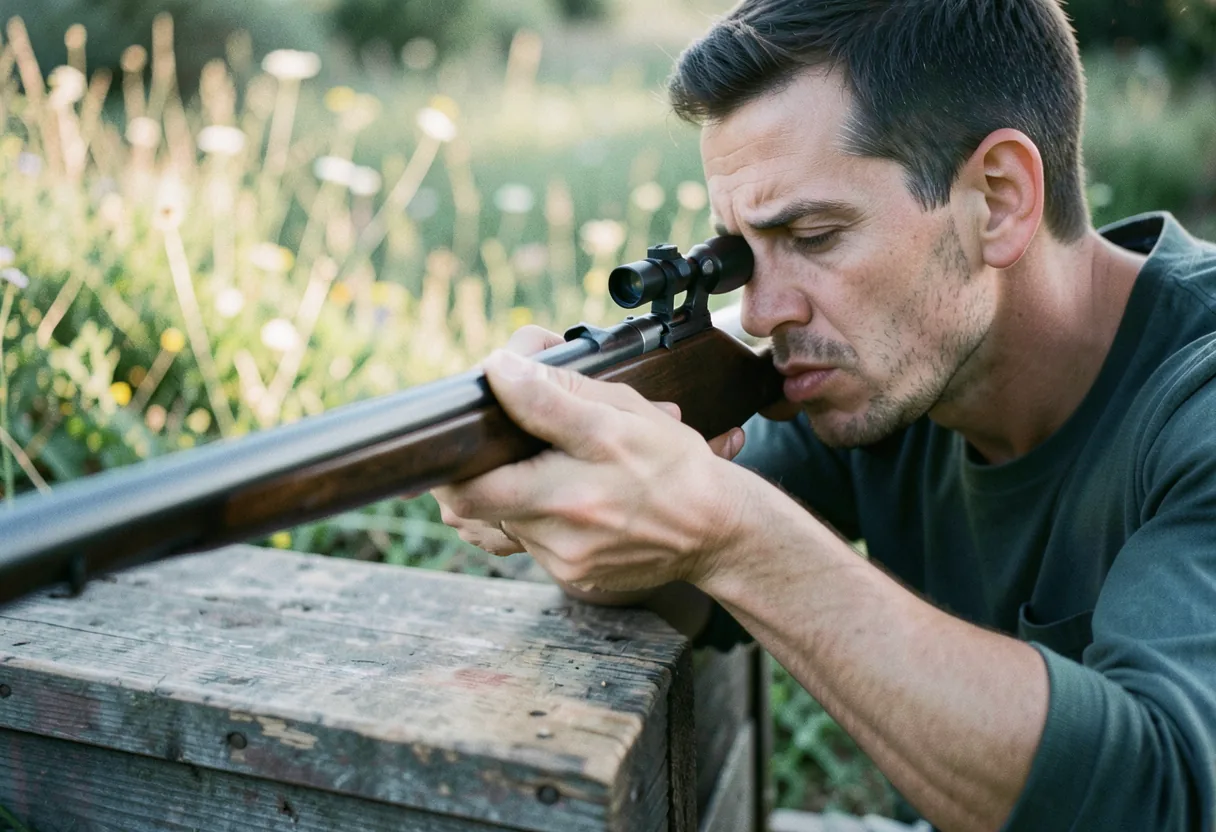
Mastering your stance is critical. The most common stance is the prone position, where you lie on your stomach, resting the rifle on a bag or sandbags for stability. This minimizes body movement and allows for finer control over the shot. For standing shots, adopt a modified Isosceles stance: feet shoulder-width apart, knees slightly bent, and the rifle supported by your non-dominant hand.
Breathing control is another key technique. Always exhale slowly before taking your shot, as holding your breath can cause tremors. Squeeze the trigger gently, never jerk it, to avoid disturbing your aim. I recommend practicing dry-firing (firing without pellets) to get comfortable with the trigger pull before loading your rifle.
Sight alignment is where precision meets patience. The rear sight should be perfectly centered in the front sight, with the target’s bullseye framed by the gap between them. Adjust your scope or iron sights gradually, making small tweaks until the shot lands where you want it. The zeroing process is essential here, so take the time to align your sights properly before each session.
03What equipment do I need for air rifle target shooting for beginners?
Beyond the rifle, you’ll need a few essentials to get started. A quality pellet, like the JSB Exact RS, is crucial, its consistent weight and shape ensure predictable flight paths. A cleaning kit, including a rod, brushes, and lubricant, will keep your rifle in top condition.
For targets, paper targets are inexpensive and effective, but electronic targets, like the ShootingChronograph, provide instant feedback on velocity and grouping. A shooting mat, like the OneTigris Tactical Shooting Mat, offers cushioning and stability when shooting prone.
Optional but helpful accessories include a pellet tray to catch spent pellets, a spotting scope to inspect your shots from a distance, and a range bag to organize your gear.
04How do I improve my accuracy in air rifle target shooting for beginners?
Consistent practice is the foundation of accuracy. Start with short distances, 10 meters, and gradually increase as your confidence grows. Focus on one aspect of your shooting at a time, such as trigger control or sight alignment, rather than trying to fix everything at once.
Analyze your shot placement to identify patterns. Are your shots consistently off to the right? That might indicate a need to adjust your sight or correct your grip. Use a notebook to log your progress, noting variables like pellet type, wind conditions, and rifle settings.
Consider joining a local shooting club or taking a beginner’s course, like those offered by the Dallas Rifle Club. Instructors can provide personalized feedback and introduce you to competition formats, such as field target or silhouette shooting.
05What are common mistakes in air rifle target shooting for beginners?
One of the most frequent mistakes is flinching, tensing up before the shot, which throws off accuracy. To combat this, practice dry-firing to desensitize yourself to the trigger pull. Another common error is inconsistent breathing. Remember to exhale slowly before taking your shot to avoid introducing shakiness.
Ignoring the wind is a rookie mistake. Even a light breeze can affect pellet trajectory, especially at longer distances. Learn to read the wind and adjust your aim accordingly. Similarly, neglecting rifle maintenance can lead to inconsistent performance, clean your rifle regularly and lubricate moving parts as needed.
Over-adjusting your sights is another pitfall. Small, incremental changes are better than large, sweeping adjustments. Patience is key, trust the process and let your shots guide your corrections.
06What are some advanced techniques to explore once I master air rifle target shooting for beginners?
Once you’ve built a solid foundation, consider experimenting with field target shooting, where targets are placed at varying distances and angles. This format requires quick adjustments and precise aiming, making it a fun challenge for intermediate shooters. Silhouette shooting is another exciting progression, where you shoot at metal cutouts shaped like animals at increasing distances.
For those interested in competition, 10-meter precision shooting tests your ability to hit tiny targets with extreme accuracy. The USA Shooting organization hosts events where you can test your skills against others. Additionally, learn to maintain your rifle yourself, cleaning the barrel, replacing seals, and adjusting the trigger can all enhance performance.
Lastly, explore different pellet types to see how they affect your rifle’s accuracy. Some pellets are designed for speed, while others prioritize consistency. Experimenting with these variables will deepen your understanding of the sport and help you fine-tune your technique.
07How do I find a local air rifle target shooting range for beginners?
Start by searching online for shooting clubs or ranges in your area. Websites like USA Shooting offer directories of affiliated clubs where you can practice. Local sporting goods stores often have bulletin boards with flyers for nearby ranges, or you can ask fellow shooters for recommendations.
When visiting a range for the first time, expect to fill out a waiver and follow specific safety rules, such as keeping your rifle unloaded until you’re on the firing line. Some ranges offer beginner classes, which are a great way to get hands-on instruction and meet other shooters. Don’t hesitate to ask experienced shooters for advice, the air rifle community is known for its camaraderie and willingness to help newcomers.
08What are the rules and safety guidelines for air rifle target shooting for beginners?
Safety is paramount in air rifle target shooting. Always treat your rifle as if it’s loaded, and never point it at anything you don’t intend to shoot. Wear eye protection at all times, and ensure the area behind your target is clear of people and obstacles. The National Rifle Association (NRA) outlines comprehensive safety guidelines for beginners, emphasizing the importance of proper handling and storage.
Follow the range’s specific rules regarding loading, unloading, and firing. Typically, you’ll be required to keep your finger off the trigger until ready to shoot and to call out “clear” when handling your rifle. Store your pellets and rifle separately when not in use, and always transport your rifle unloaded and in a case designed for firearms.
Respect other shooters by maintaining a safe distance and avoiding distractions. If you’re shooting outdoors, be mindful of noise regulations and the potential for stray pellets to travel beyond your target. A little common sense goes a long way in keeping everyone safe and enjoying the sport.
09How do I prepare for my first air rifle target shooting competition for beginners?
Preparing for your first competition starts with understanding the format. Most beginner competitions, like those organized by the Dallas Rifle Club, involve shooting at standardized paper targets from set distances, often 10 or 25 meters. Familiarize yourself with the scoring system, typically, the bullseye is worth 10 points, with decreasing points for rings farther out.
Practice under competition-like conditions. Set up targets at the same distances you’ll encounter in the competition and time yourself to simulate the pressure of a timed event. Focus on consistency, aim for tight grouping rather than just hitting the bullseye once or twice. The USA Shooting website offers practice drills designed to build competition skills.
Mental preparation is just as important as physical practice. Visualize success by imagining yourself hitting the target with precision. Stay calm and focused, and avoid comparing yourself to more experienced shooters. Remember, the goal is to improve and enjoy the experience, not to win immediately.
Air rifle target shooting for beginners is a rewarding way to build focus, precision, and patience. Start with the basics, practice consistently, and don’t hesitate to seek guidance from experienced shooters. Before long, you’ll be hitting bullseyes with confidence, and maybe even competing in your first tournament.
10Frequently asked questions
What's the best air rifle caliber for beginners?
Start with .177 caliber. It's widely available, cheaper to shoot, and offers less recoil. The .22 caliber is also popular, with more stopping power but higher cost. Avoid .25 caliber; it's heavier and pricier for novices. Pellet weight matters too, try 8.2 grains for .177 or 14.3 grains for .22.
How should I position my body for accurate shooting?
Stand with feet shoulder-width apart, knees slightly bent. Lean forward from the waist, keeping your back straight. Support the rifle with your non-dominant hand near the forearm, not the stock. Your dominant hand should grip the pistol grip firmly but not tightly. This stance reduces fatigue and improves stability.
What's the proper way to breathe while shooting?
Exhale slowly before taking your shot. Pause briefly at the bottom of your exhale, then squeeze the trigger. Avoid holding your breath, as it causes tension. This method, called the "controlled exhale," minimizes movement and improves accuracy. Practice it without firing first to get the rhythm right.
How far should my target be for practice?
Start at 10 yards. It's close enough to build confidence and see results. As you improve, move back to 20 or 30 yards. Beyond that, wind and pellet drop become significant factors. Use a target with clear aiming points, like a bullseye or silhouette. Adjust distance gradually to match your skill level.