
Air rifle pellet selection starts with weight; lighter pellets (7-8.5 grains) fly faster but lose energy, while heavier ones (10-15 grains) maintain momentum. Choose pointed pellets for long-range accuracy and round-nose for close targets. Match pellet shape to your rifle’s twist rate for optimal stability.
An air rifle pellet selection guide is a detailed resource that helps shooters choose the best pellets for their specific air rifle, shooting style, and target requirements.
Think of selecting air rifle pellets like choosing the right golf club for a specific shot; each pellet type is designed for different distances, accuracy needs, and conditions.
Key facts
- Pellet weight, shape, and material significantly impact accuracy and power.
- Common pellet head shapes include wadcutters, domed, pointed, and hollow points.
- Pellet sizes are typically measured in caliber, such as .177, .20, .22, .25, and .357.
- The right pellet can improve accuracy by up to 30% compared to an ill-suited choice.
01Why the right pellet matters for air rifle shooting
The first time I really looked at pellet selection, I was struck by how much physics comes into play. Pellet weight, shape, and material interact with air resistance, rifle power, and barrel design to determine trajectory, accuracy, and energy transfer. A pellet that flies straight in one rifle might tumble out of another. For example, a .22-caliber domed pellet like the JSB Exact RS is renowned for its consistent flight path in high-FPS rifles, while a lighter .177 wadcutter excels in close-range target shooting.
Pellet selection also affects the rifle itself. Heavier pellets can stress cheaper springs or pistons, while very light pellets may not engage the rifle’s powerplant effectively. Always check your rifle’s owner’s manual for recommended pellet weight ranges.
02Common air rifle pellet types and their uses
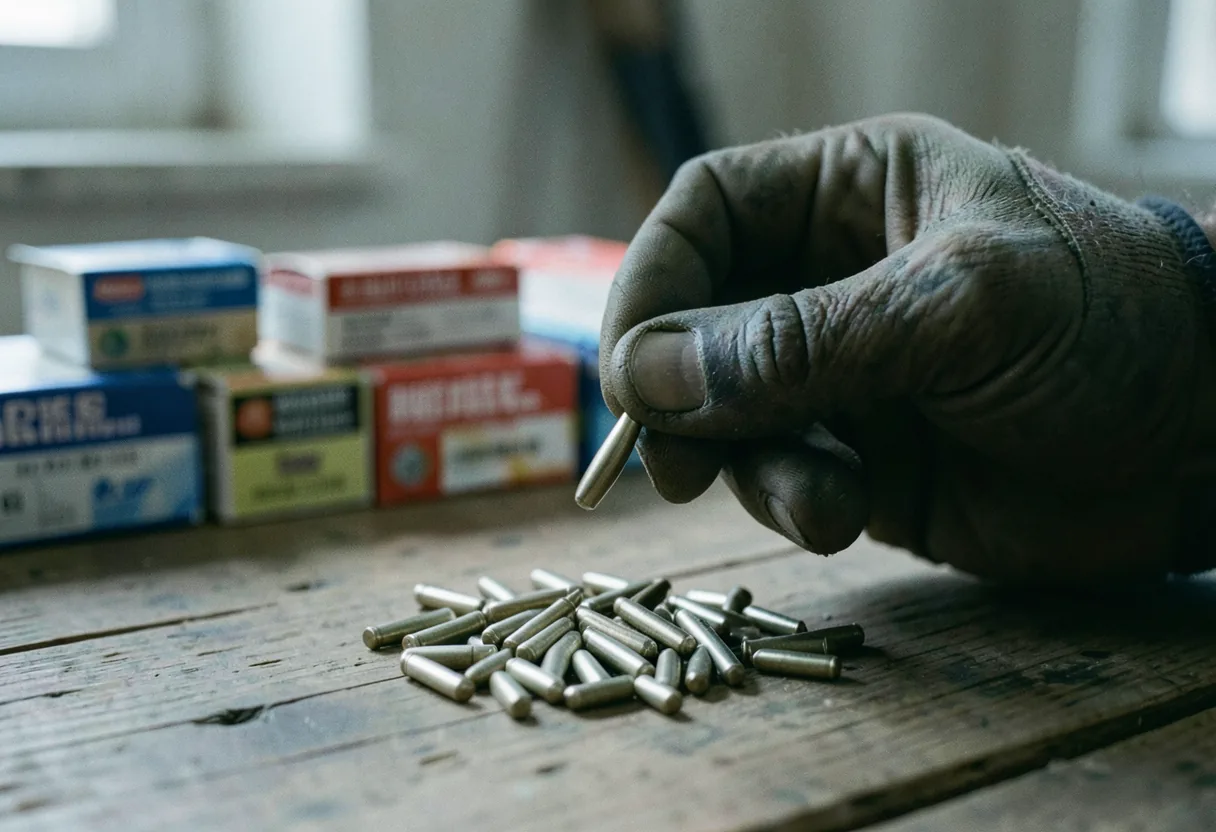
The best air rifle pellet selection guide categorizes pellets by head shape and use case. Wadcutters, with their flat faces, cleanly punch holes in paper targets, making them ideal for target shooting. Domed pellets offer better aerodynamics for longer ranges. Pointed pellets maximize energy transfer for hunting, while hollow points expand on impact for humane takedowns.
Shotgun shells and arrows are sometimes used in specialized air rifles, but these are niche cases. Most shooters work with standard pellets, wadcutters, or domed types. For instance, the Crossman Premier Hollow Point is a popular choice for small-game hunting due to its expansion on impact.
03Air rifle pellet size chart: .177 vs .22 vs .25
Pellet size is measured in caliber, with .177, .22, and .25 being the most common. Smaller calibers like .177 are favored for target shooting due to their higher velocity and flatter trajectories, while larger calibers like .22 and .25 offer more stopping power for hunting.
Here’s a quick comparison of common pellet sizes:
04Choosing the right airgun ammo for your needs
Shooting purposes dictate pellet choice. For target shooting, accuracy and clean holes matter most, so wadcutters or domed pellets like the H&N Baracuda Match are ideal. Hunting requires pellets that transfer energy efficiently, such as pointed or hollow points. For pest control, heavier pellets ensure one-shot stops.
Environmental conditions also play a role. Windy days favor heavier pellets, while calm conditions allow for lighter, faster options. Always test pellets in your specific rifle, as barrel harmonics can favor certain brands or shapes.
05Air rifle pellet compatibility guide
Not all pellets work in every air rifle. Spring-piston rifles often prefer heavier pellets, while precharged pneumatic (PCP) rifles can handle a wider range. CO2 rifles typically perform best with lighter pellets due to their consistent power output.
Here’s a quick compatibility guide:
06Steps to select the best pellets for your air rifle
- Check your rifle’s manual for recommended pellet weights and types.
- Determine your primary shooting purpose (target, hunting, pest control).
- Test different pellet shapes and weights at your preferred distance.
- Consider environmental factors like wind and temperature.
- Choose a reputable brand known for consistency, such as JSB, H&N, or Crosman.
- Store pellets properly to maintain performance (see air rifle pellet storage tips for details).
07Free air rifle pellet selection guide resources
If you’re looking for a free air rifle pellet selection guide, many manufacturers offer downloadable PDFs on their websites. The best air rifle pellets for accuracy guide also provides insights into top-performing pellets. Additionally, forums like Airgun Forum and Pyramyd Air’s blog offer community-driven advice.
For hands-on learning, consider enrolling in a course like the one offered by the National Rifle Association (NRA) on airgun safety and pellet selection. Practical experience is invaluable.
Pro tip: Always keep a log of your pellet tests, noting accuracy, velocity, and conditions. This helps refine your choices over time.
08Top air rifle pellet brands: A detailed look
Choosing the right brand is as important as selecting the right type of pellet. Some brands are known for their consistency, while others excel in specific conditions. For instance, JSB is renowned for its precision pellets, often used in competitive target shooting. The JSB Exact RS, a .22-caliber pellet, is a favorite among shooters for its tight grouping and consistent performance.
H&N is another top brand, particularly for hunting pellets. The H&N Baracuda Match is a popular choice for its accuracy and reliability. Crosman, on the other hand, offers a wide range of pellets suitable for various air rifles, from target shooting to small-game hunting.
Here’s a table comparing some of the top air rifle pellet brands:
09Advanced pellet selection: Understanding barrel harmonics
Barrel harmonics refer to the vibrations that occur when a pellet is fired. These vibrations can significantly impact accuracy. Understanding barrel harmonics can help you choose pellets that minimize these vibrations, resulting in tighter groupings. For example, a rifle might perform best with a specific weight and shape of pellet due to its unique barrel harmonics.
The first time I experimented with barrel harmonics, I was amazed at the difference it made. By testing different pellets, I found that my rifle grouped best with a .22-caliber domed pellet. This discovery was a game-changer for my accuracy. To understand barrel harmonics, start by testing different pellet weights and shapes. Note the groupings at various distances and under different conditions.
Here are some steps to help you understand barrel harmonics:
- Choose a variety of pellets with different weights and shapes.
- Fire groups at a consistent distance, such as 25 or 50 yards.
- Measure the group size for each type of pellet.
- Note the conditions, such as wind and temperature.
- Analyze the results to identify which pellets produce the tightest groups.
- Repeat the process under different conditions to confirm your findings.
10Pellet selection for specific air rifle models
Different air rifle models have unique characteristics that can influence pellet selection. For example, the is known for its consistency and accuracy, making it a popular choice among target shooters. This rifle performs best with .22-caliber pellets, particularly domed or pointed types. The Benjamin Marauder’s precharged pneumatic (PCP) system allows for a wide range of pellet weights, from 14 to 23 grains.
On the other hand, the is a spring-piston rifle that prefers heavier pellets. This rifle excels with .22-caliber pellets in the 18 to 23-grain range. The Trail NP2’s design favors pellets that provide consistent power and accuracy, making it ideal for small-game hunting and target shooting.
Here’s a table comparing pellet recommendations for specific air rifle models:
Pro tip: Always consult your rifle’s manual for specific recommendations and guidelines.
11Frequently asked questions
Why does pellet weight matter in air rifle accuracy?
Lighter pellets like .177 grain often achieve higher velocities but lose energy quickly, making them less accurate at longer ranges. Heavier pellets, such as .22 grain, retain energy better and stabilize faster, improving precision beyond 25 yards. For example, a 14.3 grain .22 caliber pellet from JSB keeps its momentum better than a 7.9 grain .177.
How do pellet shapes affect performance?
Wadcutter pellets have flat tips, ideal for paper targets, but they're less aerodynamic. Hollow-point or domed pellets reduce air resistance, increasing accuracy and energy transfer. For instance, the RWS Superfield .22 caliber pellet's domed design improves long-range performance compared to flat-tip alternatives.
What's the significance of pellet material?
Most pellets are made of lead, but alloy blends like lead-tin increase hardness, reducing barrel fouling. Some pellets use copper or other metals for indoor use where lead is banned. For example, the H&N Baracuda Match pellet uses a lead-tin alloy, balancing hardness and accuracy.
How does pellet choice impact air rifle maintenance?
Harder pellets can wear out barrels faster, requiring more frequent cleaning. Softer pellets, while gentler on the barrel, may leave more residue. Regular cleaning with patches soaked in air rifle cleaning solution ensures longevity. For instance, a .25 caliber pellet like the Gamo Hunter might need more frequent barrel maintenance than a softer .22 caliber alternative.