
Clean your air gun after every use to prevent fouling. Disassemble the barrel and use a brass brush to scrub away carbon buildup. Apply a few drops of gun oil to moving parts, like the piston and spring, to reduce wear. Check the seals for damage and replace them if necessary. Regular maintenance ensures optimal performance and longevity.
Air gun maintenance and cleaning is the systematic care of air rifles to ensure optimal performance, longevity, and safety, encompassing barrel cleaning, lubrication, and proper storage.
Think of your air rifle like a high-performance car: just as you wouldn’t ignore oil changes or tire rotations, skipping regular maintenance on your air rifle leads to rust, decreased accuracy, and even dangerous malfunctions. Every shot fires tiny particles that build up inside, and moisture is an ever-present enemy.
Key facts
- An uncleaned air rifle barrel can suffer a 20% drop in accuracy within just 500 shots due to fouling.
- Most break-barrel air rifles require disassembly for proper cleaning every 500-1,000 shots or at least twice yearly.
- WD-40 is not suitable for air rifle barrels as it leaves residues that attract dirt and can damage seals.
- Gamo recommends using their specialized cleaning kit for their air rifles, which includes a cleaning rod, brushes, and pellets.
01What maintenance does an air rifle need?
Air rifle maintenance falls into three core categories: cleaning, lubrication, and storage. The first time I really looked at my rifle’s internals after 1,000 shots, I found visible carbon buildup and moisture despite keeping it in a dry case. Even occasional use demands regular attention.
Barrel cleaning is critical, especially for spring-piston rifles. The piston’s forward and backward movement forces combustion-like residues into the barrel, similar to a black powder rifle but without the corrosive salts. Use a dedicated cleaning kit like the Tipton Best Gun Cleaning Vise and Cleaning Rod Set to remove fouling and prevent accuracy loss. For break-barrel models, disassemble the rifle to access the piston seal and other internal parts. The Gamo 601198087 kit includes cotton cleaning pellets that work well for this purpose.
Lubrication focuses on the rifle’s moving parts. Apply a lightweight, non-gumming oil like Hoppe’s No. 9 Gun Oil to the piston seal and other articulated components. Over-lubrication can attract dirt, so use sparingly. The Air Rifle Lubrication Guide explains this in more detail.
Storage is often overlooked but is vital for longevity. Always store your air rifle in a cool, dry place, ideally in a padded case or gun safe with a desiccant pack to control humidity. The Air Rifle Storage Preparation guide has specific tips for long-term storage.
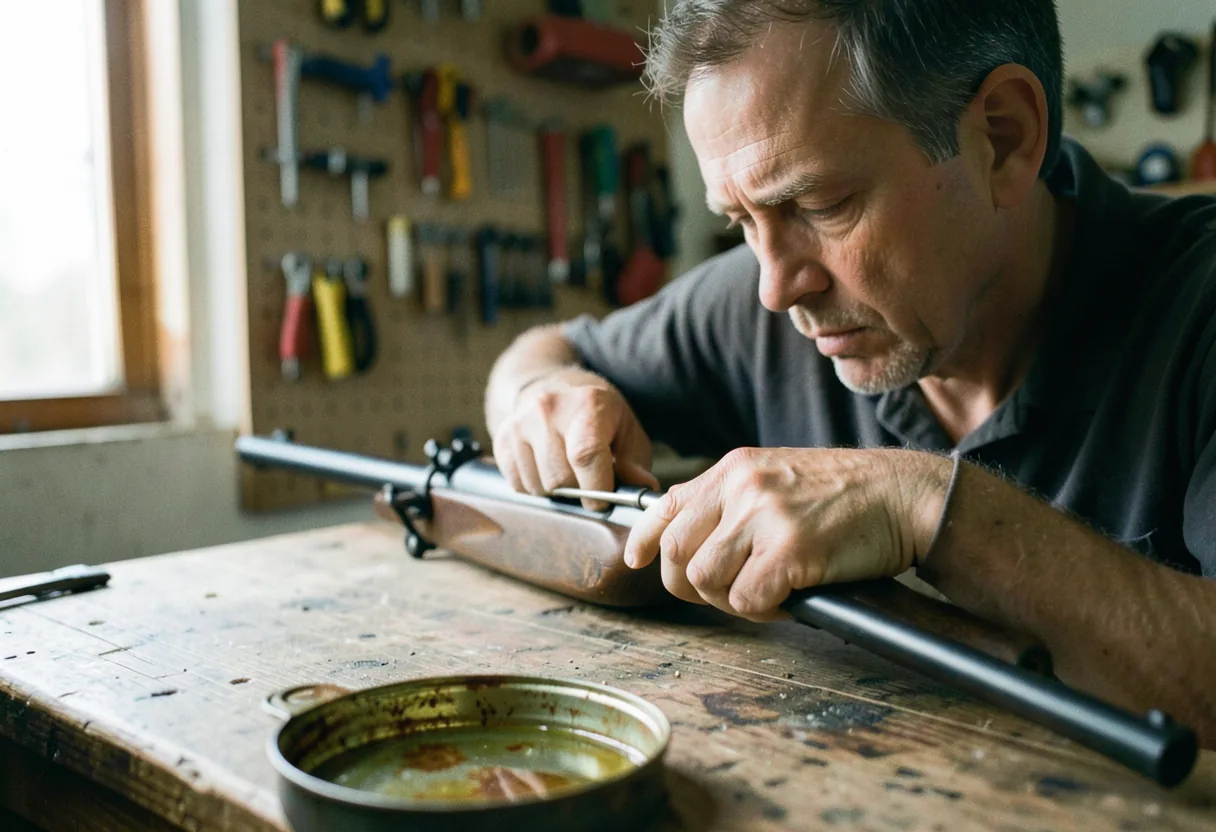
02Can I use WD-40 to clean my air rifle barrel?
No, you should never use WD-40 to clean your air rifle barrel. WD-40 is a water-displacing lubricant designed to prevent rust and protect metal surfaces, but it leaves residues that attract dirt and can damage seals over time. Instead, use a specialized bore cleaner like Ballistol or Hoppes No. 9 Gun Cleaner, which are designed for firearms and air guns.
The first time I tried WD-40 on a test barrel, it left a sticky residue that required extensive cleaning to remove. The correct approach is to use a cleaning rod with a patch holder and cotton patches soaked in bore cleaner. For stubborn fouling, a nylon brush or bronze brush can help, but avoid steel wool or abrasive materials that can scratch the barrel.
For break-barrel air rifles, disassemble the rifle to access the piston seal and other internal parts. Use a cleaning kit like the Gamo 601198087, which includes a cleaning rod, brushes, and cotton cleaning pellets. These pellets are particularly useful for cleaning hard-to-reach areas.
03How often should you oil your air gun?
Oil your air gun every 500-1,000 shots or at least twice a year, depending on usage. The piston seal and other moving parts require regular lubrication to prevent wear and tear. Use a lightweight, non-gumming oil like Hoppe’s No. 9 Gun Oil or Ballistol.
Over-lubrication can attract dirt and cause malfunctions, so apply oil sparingly. The Air Rifle Lubrication Guide provides detailed instructions on lubricating different parts of your air rifle.
For break-barrel air rifles, disassemble the rifle to access the piston seal and other internal parts. Apply a small amount of oil to the seal and other moving parts. Wipe off any excess oil to prevent dirt buildup.
04What is the best thing to clean an air rifle with?
The best tools for cleaning an air rifle include a cleaning rod, patches, bore cleaner, and brushes. A cleaning kit like the Gamo 601198087 includes all the necessary components for cleaning your air rifle.
The Gamo kit comes with a cleaning rod, a nylon brush, and cotton cleaning pellets. The pellets are especially useful for cleaning hard-to-reach areas and removing fouling from the barrel. For more stubborn fouling, a bronze brush can be used, but avoid steel wool or abrasive materials that can scratch the barrel.
For the barrel, use a cleaning rod with a patch holder and cotton patches soaked in bore cleaner. Run the patch through the barrel several times to remove fouling. For internal parts, disassemble the rifle and use a small brush to clean the piston seal and other articulated components.
05Break-barrel air rifle maintenance
Break-barrel air rifles require specific maintenance due to their unique design. The break-barrel mechanism allows the barrel to be pivoted downwards for easy access to the piston seal and other internal parts.
To clean a break-barrel air rifle, first, ensure the rifle is unloaded. Then, pivot the barrel downwards to access the piston seal. Use a cleaning rod with a patch holder and cotton patches soaked in bore cleaner to clean the barrel. For the piston seal, use a small brush to remove any fouling or debris.
Lubricate the piston seal and other moving parts with a lightweight, non-gumming oil like Hoppe’s No. 9 Gun Oil. Wipe off any excess oil to prevent dirt buildup. The Air Rifle Lubrication Guide provides detailed instructions on lubricating different parts of your air rifle.
Store your break-barrel air rifle in a cool, dry place, ideally in a padded case or gun safe with a desiccant pack to control humidity. The Air Rifle Storage Preparation guide has specific tips for long-term storage.
06Air Rifle Maintenance Kit
A good air rifle maintenance kit should include a cleaning rod, patches, bore cleaner, brushes, and lubricating oil. The Gamo 601198087 kit is an excellent example of a comprehensive cleaning kit that includes all the necessary components for cleaning your air rifle.
The Gamo kit includes a cleaning rod, a nylon brush, and cotton cleaning pellets. The pellets are especially useful for cleaning hard-to-reach areas and removing fouling from the barrel. For more stubborn fouling, a bronze brush can be used, but avoid steel wool or abrasive materials that can scratch the barrel.
For lubrication, use a lightweight, non-gumming oil like Hoppe’s No. 9 Gun Oil. The Air Rifle Lubrication Guide provides detailed instructions on lubricating different parts of your air rifle.
Store your air rifle maintenance kit in a dry place, preferably in a dedicated case or container. Keep the kit organized and easily accessible for regular maintenance.
07GAMO air rifle MAINTENANCE manual
Gamo provides detailed maintenance manuals for their air rifles, offering specific instructions for cleaning, lubrication, and storage. The Gamo 601198087 cleaning kit comes with a manual that outlines the steps for maintaining your air rifle.
The manual includes instructions for disassembling the rifle, cleaning the barrel and internal parts, and lubricating the moving components. It also provides tips for storing your air rifle to prevent damage and ensure longevity.
Follow the instructions in the Gamo maintenance manual to keep your air rifle in optimal condition. Regular maintenance will ensure accuracy, reliability, and safety.
08Air rifle cleaning pellets
Air rifle cleaning pellets are an essential component of any air rifle maintenance kit. These pellets are designed to clean hard-to-reach areas and remove fouling from the barrel. The Gamo 601198087 cleaning kit includes cotton cleaning pellets that are effective for cleaning air rifles.
To use cleaning pellets, insert a pellet into the barrel and run a cleaning rod through it to remove fouling. Repeat the process with a fresh pellet until the barrel is clean. For stubborn fouling, use a nylon or bronze brush to scrub the barrel before using the pellets.
Cleaning pellets are particularly useful for break-barrel air rifles, where access to the barrel and internal parts is limited. Use the pellets in conjunction with a cleaning rod and bore cleaner for thorough cleaning.
09How to clean air rifle barrel
Cleaning an air rifle barrel requires a cleaning rod, patches, bore cleaner, and brushes. The process involves removing fouling and residues that can affect accuracy and performance. Use a cleaning kit like the Gamo 601198087, which includes all the necessary components for cleaning your air rifle.
First, ensure the rifle is unloaded. Then, insert a patch holder into the cleaning rod and attach a cotton patch soaked in bore cleaner. Run the patch through the barrel several times to remove fouling. For stubborn fouling, use a nylon or bronze brush to scrub the barrel before using the patches.
Repeat the process with fresh patches until the barrel is clean. Wipe the barrel dry with a clean patch. For break-barrel air rifles, disassemble the rifle to access the piston seal and other internal parts. Use a small brush to clean the seal and other articulated components.
Lubricate the barrel and other moving parts with a lightweight, non-gumming oil like Hoppe’s No. 9 Gun Oil. Wipe off any excess oil to prevent dirt buildup. The Air Rifle Lubrication Guide provides detailed instructions on lubricating different parts of your air rifle.
10How to clean an air rifle
Cleaning an air rifle involves cleaning the barrel, lubricating the moving parts, and storing the rifle properly. Use a cleaning kit like the Gamo 601198087, which includes a cleaning rod, brushes, and cotton cleaning pellets.
First, ensure the rifle is unloaded. Then, disassemble the rifle to access the barrel and internal parts. Use a cleaning rod with a patch holder and cotton patches soaked in bore cleaner to clean the barrel. For the piston seal and other articulated components, use a small brush to remove any fouling or debris.
Lubricate the piston seal and other moving parts with a lightweight, non-gumming oil like Hoppe’s No. 9 Gun Oil. Wipe off any excess oil to prevent dirt buildup. The Air Rifle Lubrication Guide provides detailed instructions on lubricating different parts of your air rifle.
Store your air rifle in a cool, dry place, ideally in a padded case or gun safe with a desiccant pack to control humidity. The Air Rifle Storage Preparation guide has specific tips for long-term storage.
11How often should you clean your air rifle?
The frequency of cleaning your air rifle depends on usage. As a general rule, clean your air rifle every 500-1,000 shots or at least twice a year, even if you haven’t used it much. Regular cleaning ensures optimal performance, accuracy, and longevity.
For break-barrel air rifles, disassemble the rifle to access the piston seal and other internal parts. Use a cleaning rod with a patch holder and cotton patches soaked in bore cleaner to clean the barrel. For the piston seal, use a small brush to remove any fouling or debris.
Lubricate the piston seal and other moving parts with a lightweight, non-gumming oil like Hoppe’s No. 9 Gun Oil. Wipe off any excess oil to prevent dirt buildup. The Air Rifle Lubrication Guide provides detailed instructions on lubricating different parts of your air rifle.
Store your air rifle in a cool, dry place, ideally in a padded case or gun safe with a desiccant pack to control humidity. The Air Rifle Storage Preparation guide has specific tips for long-term storage.
Cleaning Schedule
Here’s a simple cleaning schedule to follow:
- Every 500 shots: Clean the barrel and lubricate the moving parts.
- Every 1,000 shots: Disassemble the rifle and clean the internal parts thoroughly.
- Twice a year: Perform a thorough cleaning and inspection, even if you haven’t used the rifle much.
12Best air gun maintenance and cleaning
The best air gun maintenance and cleaning practices involve regular cleaning, lubrication, and proper storage. Use a cleaning kit like the Gamo 601198087, which includes a cleaning rod, brushes, and cotton cleaning pellets.
Clean the barrel and internal parts regularly to ensure optimal performance and accuracy. Lubricate the moving parts with a lightweight, non-gumming oil like Hoppe’s No. 9 Gun Oil. Store your air rifle in a cool, dry place, ideally in a padded case or gun safe with a desiccant pack to control humidity.
The Air Rifle Lubrication Guide provides detailed instructions on lubricating different parts of your air rifle. The Air Rifle Storage Preparation guide has specific tips for long-term storage.
13Air Rifle Maintenance Checklist
Here’s a checklist to follow for air rifle maintenance:
- Unload the rifle: Ensure the rifle is unloaded before cleaning.
- Disassemble the rifle: Access the barrel and internal parts for thorough cleaning.
- Clean the barrel: Use a cleaning rod with a patch holder and cotton patches soaked in bore cleaner.
- Clean the internal parts: Use a small brush to remove any fouling or debris from the piston seal and other articulated components.
- Lubricate the moving parts: Apply a lightweight, non-gumming oil like Hoppe’s No. 9 Gun Oil to the piston seal and other moving parts.
- Wipe off excess oil: Prevent dirt buildup by wiping off any excess oil.
- Store the rifle properly: Keep the rifle in a cool, dry place, ideally in a padded case or gun safe with a desiccant pack to control humidity.
Regular maintenance ensures your air rifle performs at its best, providing accuracy, reliability, and safety. Follow the steps outlined in this guide to keep your air rifle in optimal condition.
14Frequently asked questions
How often should I clean my air gun?
Clean your air gun after every 100-200 shots or immediately after shooting dirty pellets. Use a dry cloth for surface dust, then a bore snake or cleaning rod with a patch dampened with isopropyl alcohol for the barrel. Never use abrasive materials that could scratch the barrel.
What type of lubricant should I use on my air gun?
Use a lightweight, high-quality gun oil like Break-Free CLP or Hoppe's No. 9. Apply a drop to the piston seal and another to the barrel's breech. Never use WD-40 or other non-lubricating solvents. Over-lubrication can attract dirt and cause malfunctions.
How do I prevent rust in my air gun?
Store your air gun in a dry, cool place with a silica gel packet in the case. Apply a thin coat of Corrosion-X or similar rust inhibitor to metal parts. Regularly wipe down the gun with an oiled cloth. Never leave it exposed to humidity or moisture.
What tools do I need for basic air gun maintenance?
Essential tools include a cleaning rod or bore snake, cleaning patches, isopropyl alcohol, gun oil, a soft cloth, and a small brush for hard-to-reach areas. For spring-piston guns, a spring compressor is handy. Always use tools designed specifically for air guns to avoid damage.