
Air rifle competitions follow specific rules set by governing bodies like the ISSF. Competitors must use .177 caliber rifles, shoot from a prone, standing, or kneeling position, and aim for a 10-ring target. Matches consist of series, with scores tallied per shot. Safety protocols, such as muzzle direction, are strictly enforced.
Air rifle competition rules explained define the structured framework for precision air rifle shooting, outlining everything from equipment specifications to scoring methods.
Imagine threading a needle while standing 10 meters away, with your hands steady and your breath controlled, air rifle competition rules are the meticulous guidelines ensuring everyone attempts that challenge under the same exacting conditions.
Key facts
- Competitions are governed by the International Shooting Sport Federation (ISSF) rules for most events, including the Olympics.
- Standard air rifles must use a maximum caliber of 4.5mm (.177 inch) and a maximum muzzle energy of 7.5 joules.
- Matches are typically conducted at distances of 10 meters, with precision scoring down to tenths or tenths.
- The International Shooting Sport Federation (ISSF) recently introduced electronic scoring systems for enhanced accuracy.
01What are the core air rifle competition rules explained for equipment?
Air rifle competitions mandate strict equipment regulations to ensure fairness. Competitors must use air rifles that meet specific criteria: the maximum caliber is fixed at 4.5mm (.177 inch), and the muzzle energy cannot exceed 7.5 joules. This standard applies to both spring-powered and compressed air rifles, though most elite shooters use PCP (pre-charged pneumatic) or CO2 rifles for consistency.
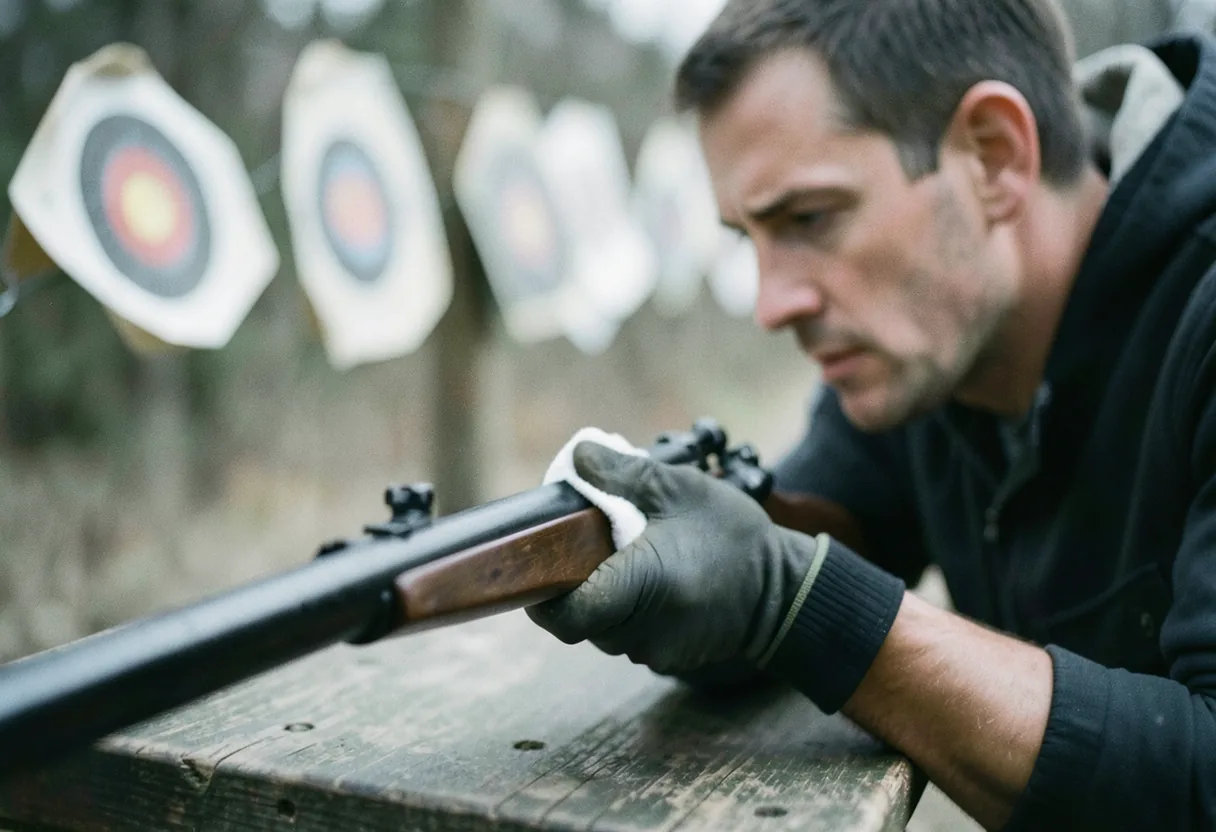
In terms of accessories, shooters are permitted to use slings and gloves for stability, but electronic sights or any form of magnification are prohibited. The first time I inspected a competition-grade air rifle, I noticed how the stock often features adjustable components to tailor fit the shooter’s posture, minimizing movement during firing. This is why many competitors invest in custom stocks, like those from Anschütz or Feinwerkbau, which are renowned for their precision engineering.
02How does the scoring system work in air rifle competition rules explained?
The scoring system in air rifle competitions is rigorous, with targets divided into 10 concentric rings, each worth a different number of points. A shot in the inner 10-ring scores 10.9 points, while the outermost ring is worth 4.4 points. Electronic targets, now widely adopted, offer instant feedback, reducing human error in scoring. The ISSF introduced this technology to improve consistency, particularly in high-stakes events like the Olympics.
Matches typically consist of 40 or 60 shots, depending on the event. For example, in the 10-meter air rifle event at the Olympics, competitors fire 60 shots in a prone or standing position. The top eight shooters advance to a final round, where they shoot an additional 20 shots, with the scores from the final round determining the winner. This format ensures that only the most consistent and precise shooters advance.
03What are the air rifle competition rules explained for match structure?
Air rifle competitions follow a structured format designed to test accuracy and mental fortitude. Matches are typically divided into qualification rounds and finals. In the qualification round, shooters fire a set number of shots (usually 40 or 60) within a time limit, often 50 minutes. The top performers advance to the finals, where the pressure intensifies.
During the finals, shooters must demonstrate both speed and precision. For instance, in the ISSF World Cup events, finalists have just 50 seconds per shot, a significant increase in pressure compared to the qualification round. This structure is intended to separate the best shooters from the rest, as it demands not only technical skill but also the ability to perform under extreme stress.
04What are the air rifle competition rules explained for safety?
Safety is paramount in air rifle competitions, and strict rules are enforced to protect all participants. Rifles must be unloaded and secured when not in use, and shooters are required to follow specific loading and unloading procedures under the supervision of range officers. The first time I attended a competition, I was struck by how seriously these protocols were taken, every shooter and official adhered to them without exception.
Additionally, competitors must wear ear and eye protection at all times on the range. This is non-negotiable, as air rifles, while less powerful than firearms, can still produce hazardous noise levels and debris. Range officers are empowered to disqualify any shooter who violates these safety rules, underscoring the importance of adherence.
05What are the air rifle competition rules explained for disqualification?
Disqualification in air rifle competitions can occur for several reasons, primarily related to rule violations or unsafe conduct. Shooter’s Guide to Competitions outlines that failure to comply with equipment specifications, such as using an unauthorized rifle or sight, will result in immediate disqualification. Similarly, any form of unsportsmanlike conduct, such as interfering with another competitor’s performance, can lead to removal from the competition.
Safety violations are another common cause for disqualification. For example, if a shooter fails to secure their rifle when instructed or neglects to wear proper protective gear, they can be disqualified. The ISSF takes these rules seriously, as evidenced by their strict enforcement during major events like the Olympic Games.
Comparison of Competition Types
Equipment Checklist for Competitors
06How can competitors prepare for air rifle competition rules explained?
Preparation for air rifle competitions involves a combination of physical training, mental conditioning, and familiarity with the rules. Competitors should practice regularly, focusing on maintaining a consistent stance and breath control. Additionally, understanding the specific rules of the competition they are entering is crucial, as minor details can significantly impact performance.
For example, the Air Rifle Competition Gear Checklist emphasizes the importance of using competition-approved equipment. Shooters should also study the scoring system and familiarize themselves with the electronic targets used in most modern competitions. The ISSF provides detailed guidelines on their website, which can be invaluable for both newcomers and experienced competitors.
07What are the air rifle competition rules explained for youth competitions?
Youth air rifle competitions are designed to introduce younger shooters to the sport while adhering to safety and skill development principles. These competitions often use the same rules as adult events but with modifications to accommodate younger participants. For instance, the distance may be reduced, or the number of shots in a match may be lower to suit the attention span and physical capabilities of younger shooters.
The Air Rifle Competition Training Schedule often emphasizes the importance of mentorship in youth competitions. Coaches play a crucial role in guiding young shooters through the rules and techniques, ensuring they develop a strong foundation in the sport. Programs like the Junior Olympic shooting camps provide structured training and competition opportunities for young athletes.
08How do electronic scoring systems affect air rifle competition rules explained?
Electronic scoring systems have revolutionized air rifle competitions by providing instant, accurate feedback. These systems eliminate the need for human judges to assess shot placement, reducing the potential for errors and disputes. The ISSF has been at the forefront of implementing electronic targets in major competitions, including the Olympics, to ensure fairness and consistency.
The introduction of electronic scoring has also influenced the training methods of competitors. Shooter can now analyze their performance in real-time, identifying areas for improvement and adjusting their techniques accordingly. This technology has made the sport more accessible and transparent, benefiting both competitors and spectators.
09How do international air rifle competition rules explained differ from national ones?
International air rifle competition rules, governed by the ISSF, set the global standard for the sport, but national federations often introduce slight variations to accommodate local conditions or cultural preferences. For example, the United States’ , USA Shooting, follows ISSF rules for international events but may adjust formats for domestic competitions to encourage broader participation. In the UK, the National Smallbore Rifle Association (NSRA) similarly adheres to ISSF guidelines but offers additional categories for different skill levels.
One key difference lies in the equipment specifications. While the ISSF mandates a maximum muzzle energy of 7.5 joules, some national competitions may allow slightly higher energies for certain categories. For instance, the German Shooting Sports Federation (Deutscher Schützenbund, DSB) permits up to 8 joules in some national events, reflecting a balance between competition intensity and safety standards. Additionally, national competitions may feature unique formats, such as the Swiss Shooting Federation’s (Schweizer Schützenvereinigung, SSV) inclusion of traditional shooting disciplines alongside modern air rifle events.
Comparison of International and National Competition Rules
Steps to Succeed in Air Rifle Competitions
- Familiarize yourself with the Air Rifle Competition Rules Explained and equipment specifications.
- Invest in high-quality, competition-approved gear, including a precision air rifle and protective equipment.
- Develop a consistent training routine focusing on stance, breath control, and trigger discipline.
- Participate in local and regional competitions to gain experience and refine your skills.
- Study the scoring system and practice using electronic targets to prepare for modern competitions.
- Seek mentorship from experienced shooters or coaches to improve your technique and mental preparation.
Mastering air rifle competition rules explained is just the beginning; success in this sport requires dedication, precision, and a deep understanding of the intricacies involved. Whether you’re a newcomer or an experienced shooter, adhering to these rules and continuously refining your skills will set you on the path to competitive excellence.
10Frequently asked questions
What are the standard distance regulations in ISSF 10m air rifle competitions?
In ISSF 10m air rifle events, shooters engage targets at a fixed distance of 10 meters. The target measures 45 mm in the 10-ring and 4.5 mm in the 10.9-ring. Each competitor fires 60 shots in a two-hour session, aiming for precision and consistency.
How is scoring determined in air rifle competitions?
Scoring in air rifle competitions is precise: the inner 10-ring is worth 10.9 points, while the outer 10-ring scores 10.0 points. Scoring decrements by 0.1 points per ring outward. A perfect score is 600 points (60 shots at 10.9 each).
What equipment is mandatory for air rifle competitors?
Competitors must use air rifles that comply with ISSF regulations, such as those meeting the .177 caliber requirement and having a maximum muzzle energy of 7.5 Joules. Mandatory equipment includes a shooting jacket, gloves, and a backstop for safety.
What are the penalties for violating the dress code in air rifle competitions?
Violating the dress code, such as not wearing a shooting jacket or gloves, can result in disqualification. The ISSF mandates specific attire to ensure safety and uniformity. Competitors must adhere to these rules to avoid penalties during matches.